
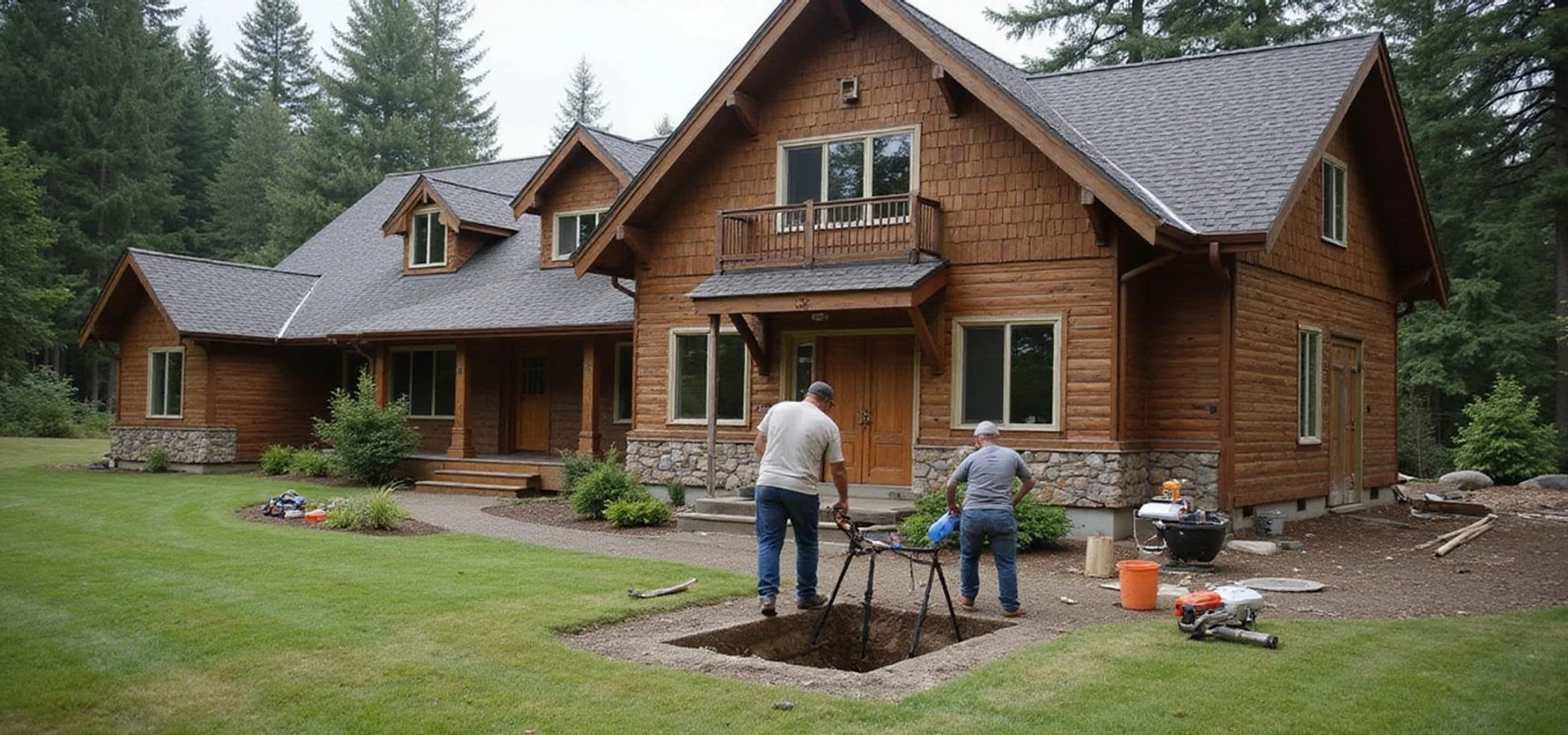
Central District Foundation Repair and Wall Evaluation
Seattle Foundation Repair evaluates and repairs basement walls, foundations, and crawl spaces across the Central District. Older homes with full basements here bring cracked walls, bowing walls, and waterproofing questions more often than crawl-space work. We identify the movement mechanism and soil conditions before recommending underpinning, wall reinforcement, or drainage.
Free Preliminary Project Review
Tell us what you're noticing before you commit to anything.
Laser Manometer Elevation Survey
Multi-point measurements record exact floor differentials.
Written Scope With Exclusions
Quantities, depths, and permit notes stated in writing.
Registered Washington Contractor
Registration and bond are verifiable through L&I Verify.
Common concerns
Foundation Warning Signs Worth a Second Look
Most people reach out because something has changed and they cannot tell how serious it is. That is a reasonable place to start.
Cracks you cannot read
A diagonal line above a door frame or a stair-step crack in block work means something. Width alone does not tell you what. We measure the pattern and the movement before calling it anything.
Floors that have gone out of level
Sloping floors, doors that bind in one season, a gap opening where a wall meets the ceiling. These often trace to crawl space framing rather than the perimeter foundation, and the fix differs completely.
Water arriving every wet season
Puget Sound rain is sustained rather than dramatic, which is why basements leak in January and stay dry in July. Whether you need drainage or waterproofing depends on how the water is getting in.
Quotes you cannot compare
Two proposals, two numbers, no shared language. We itemise quantities, depths, and exclusions so you can see what each line is actually paying for and where the two differ.
Available here
Our Foundation Repair Services in Central District
Seattle Foundation Repair evaluates and repairs basement walls, foundations, and crawl spaces across the Central District. Older homes with full basements here bring cracked walls, bowing walls, and waterproofing questions more often than crawl-space work. We identify the movement mechanism and soil conditions before recommending underpinning, wall reinforcement, or drainage.
Foundation Repair
Support and stabilization for settling foundations, matched to assessed conditions and approved scope.
Read moreSeismic Retrofit
Foundation anchorage, sill connections, and cripple wall bracing that strengthen a home's load path.
Read moreCrawl Space Repair
Repair for failing posts, beams, joists, and sills that cause sagging or bouncy floors.
Read moreBasement Walls
Reinforcement and stabilization for cracked, bowing, or moving basement walls.
Read moreWaterproofing
Water-entry assessment with collection, drainage, and discharge systems.
Read moreMoisture Control
Vapor barriers, encapsulation, drainage, and humidity management where appropriate.
Read moreThe process
How an Evaluation Works
Four steps from the first message to a decision you can actually make. Nothing is committed until you have the written scope in front of you.
-
Step 01
Tell us what you see
Send the observations, photos, and rough timeline through the quote form. We'll tell you what an evaluation would examine and what it cannot establish from a photo.
-
Step 02
On-site evaluation
We record accessible observations and take multi-point laser manometer elevation readings, so floor differentials are measured rather than estimated by eye.
-
Step 03
Findings and limits explained
You get a plain explanation of what the findings do and do not indicate, including the limits of a visual assessment and whether an engineer should be involved.
-
Step 04
Written scope and next step
If repair is warranted, the proposal states quantities, depths, permit notes, and explicit exclusions. If it is not, we say that too.
Need a foundation opinion in Central District?
Send the observations and the address. We'll confirm coverage, the applicable permitting authority, and what an evaluation would examine.
Local difference
Why Central District Homeowners Work With Us
Basement wall movement mechanism identified before a treatment is chosen
Epoxy injection, carbon fiber reinforcement, wall anchors, and bracing explained as distinct options with written scopes
Interior reinforcement approaches used where narrow Central District side yards make excavation impractical
Structural repair kept separate from cosmetic crack sealing in every proposal
Laser manometer elevation surveys document floor differentials across your basement
Coverage across Madrona, Leschi, Judkins Park, Squire Park, and Atlantic
Customer experience
What Central District Customers Say
The evaluation was calm and thorough. They explained which cracks were cosmetic and which were load-bearing, and gave us a written scope with clear exclusions before any work.
Homeowner, Queen Anne
Queen Anne, WA
Our floors had started to slope near the kitchen. They audited the crawl space, showed us the failing posts, and fixed the moisture source too, not just the framing.
Homeowner, Ballard
Ballard, WA
We wanted a seismic retrofit before selling. They walked us through the SDCI Standard Plan and were honest that our older masonry needed an engineer's review.
Homeowner, Wallingford
Wallingford, WA
Illustrative summaries of the service experience. They are not verified Google reviews and carry no star ratings. Real reviews replace them once our Google Business Profile is connected.
Local knowledge
Dense Blocks, Full Basements, and Interior Solutions
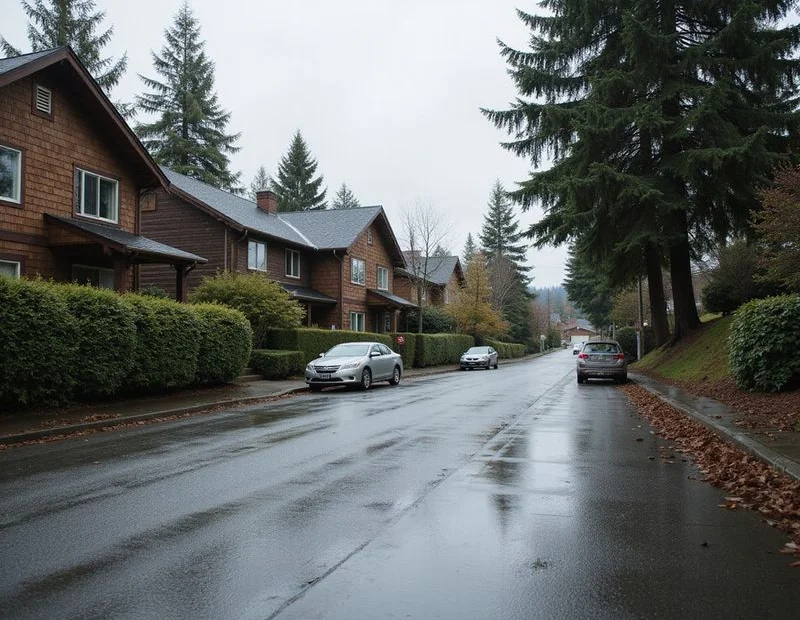
Central District blocks are tightly built. Narrow side yards between Craftsman bungalows and mid-century homes mean exterior excavation is often impractical, so interior drainage, basement waterproofing, and interior wall reinforcement come up more frequently here than on larger suburban lots. On streets near Judkins Park and along the hillside toward Leschi, we plan access before quoting so the repair method matches the site. Where underpinning is needed, helical piers can be installed from interior access points without trenching the full perimeter.
Where a basement has been finished, we note what has to come out to reach the wall and state it in the scope so restoration expectations are set before work starts. Many Central District basements were converted to living space decades ago, and the wall behind the drywall is often the one that needs inspection. Soil stabilization and proper drainage routing are assessed alongside the structural repair to address the root cause.
As of 2026, the Central District falls under City of Seattle (SDCI) permitting. Foundation repair permits, any ECA review near the Leschi slopes, and structural engineering referrals go through the same SDCI process as the rest of Seattle proper.
Neighbourhoods covered
Permitting authority
City of Seattle (SDCI)
Requirements differ between jurisdictions. We confirm which applies to your parcel before quoting rather than assuming Seattle rules carry over.
Landmarks & access
Near Garfield High School, Frink Park.
Via I-5, SR-520 access via 23rd Ave
Transit: Link light rail (Judkins Park Station)
Get directionsMap showing the general Central District area we serve. It is not a site assessment and it does not indicate risk at any specific address.
Local questions
Central District Questions
There is a horizontal crack across my Central District basement wall. How serious is that?
A horizontal crack can signal lateral soil or hydrostatic load pushing on the wall, which is worth evaluating promptly. Whether the wall is actually deflecting determines the repair approach. We measure deflection at multiple points rather than judging severity by crack width alone.
Is epoxy injection a structural repair for bowing basement walls?
Epoxy injection seals and bonds a crack, but it does not reinforce a wall that is actively moving. Carbon fiber straps, wall anchors, or steel bracing address lateral deflection. We keep the two purposes separate in every written scope so you know what each line item does.
Which Central District neighborhoods do you serve?
We cover Madrona, Leschi, Judkins Park, Squire Park, Atlantic, and the surrounding Central District streets. Nearby Beacon Hill is also within our service area. If you are near a boundary, ask and we will confirm coverage for your address.
How much does basement wall repair cost in the Central District?
Cost depends on the wall length affected, the reinforcement method, interior access conditions, and whether finishes need removal. A single-wall carbon fiber reinforcement differs significantly from a full-perimeter anchor system. We provide an itemized written scope after evaluation so you can compare each line item.
My basement walls are bowing inward. What repair options exist?
The options depend on how far the wall has moved. Minor deflection may suit carbon fiber reinforcement. Moderate movement often calls for helical wall anchors or steel channels. Severe displacement may require partial reconstruction. An evaluation with deflection measurements identifies which range your wall falls into.
Do older Central District homes need seismic retrofits?
Many pre-1960 homes in the Central District have unbolted sill plates or unbraced cripple walls. Age alone is not a diagnosis, but it is a reason to inspect the foundation anchorage and load path. We assess current conditions and explain what a prescriptive retrofit would involve for your specific home.
Can foundation work be done on a home with a finished basement?
Yes. We note which finishes need to be removed to access the foundation wall and include that in the written scope. Restoration of removed finishes is typically the homeowner's responsibility unless otherwise stated, and we clarify that before work begins.
Will homeowner insurance cover foundation repair in Seattle?
Most standard homeowner policies in Washington do not cover foundation repair caused by settling, poor drainage, or normal wear. Coverage may apply when damage results from a sudden event like a broken water line. We recommend checking your policy before scheduling an evaluation so you know what documentation to request from the start.
When is the best time of year for foundation repair in Seattle?
Foundation work in the Seattle area can be done year-round, though the drier months from late May through September allow easier excavation, faster concrete curing, and simpler drainage routing. We schedule Central District projects through the wet season as well, but timelines may shift when sustained rain slows outdoor access or interior waterproofing curing.
Still have a question?
Send us what you're noticing and we'll tell you plainly what it might mean and what an evaluation would examine.
Ask us about your propertyNearby coverage
Areas We Also Serve Near Central District
Next step
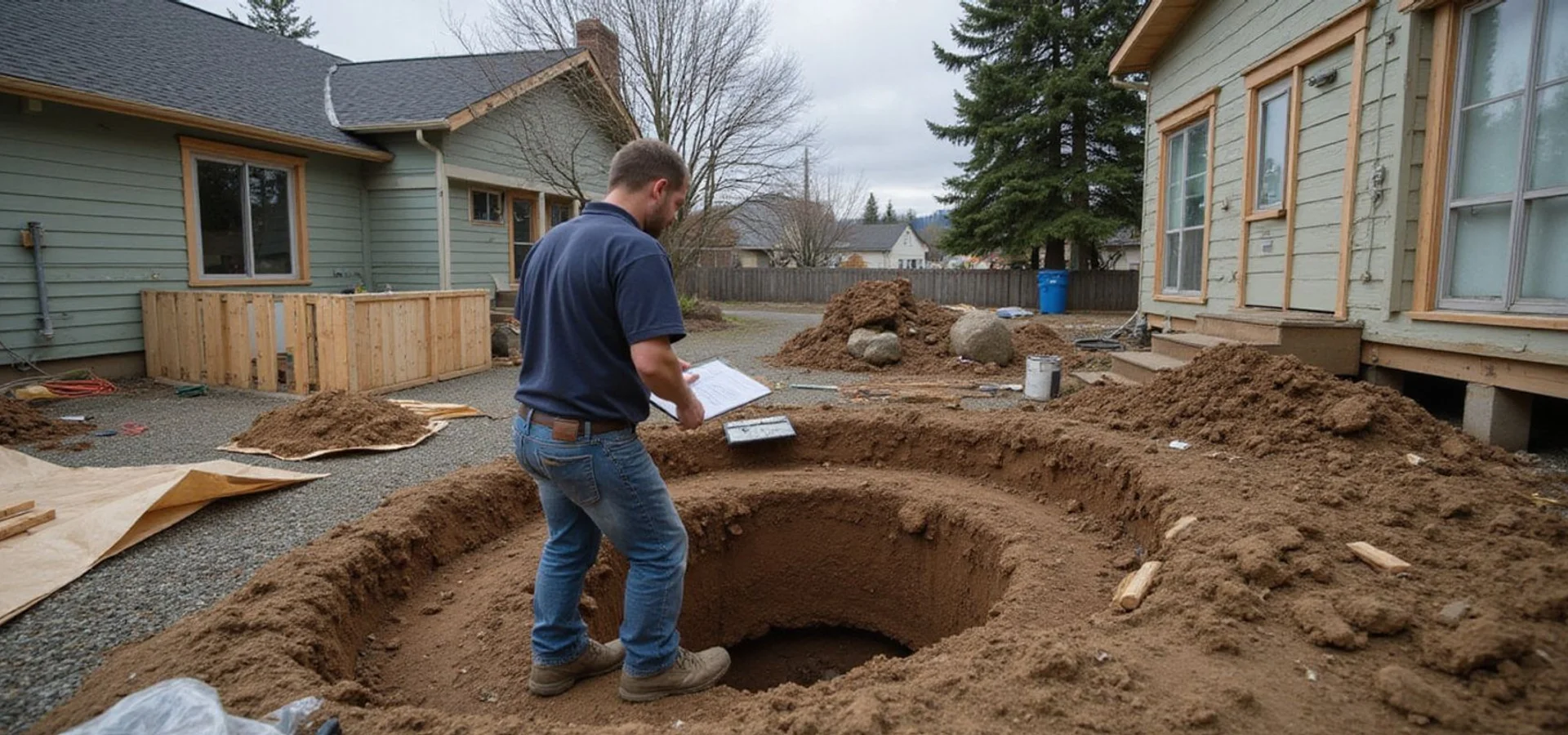
Foundation concerns in Central District?
Free preliminary project review. Free preliminary project review on every enquiry, with the evaluation charge explained before anything is booked.
Free preliminary project review. Any charge for an on-site evaluation is explained before booking.