Registered Washington contractor · Written scope with clear exclusions
Free project review

Concrete Leveling & Slab Lifting in Seattle

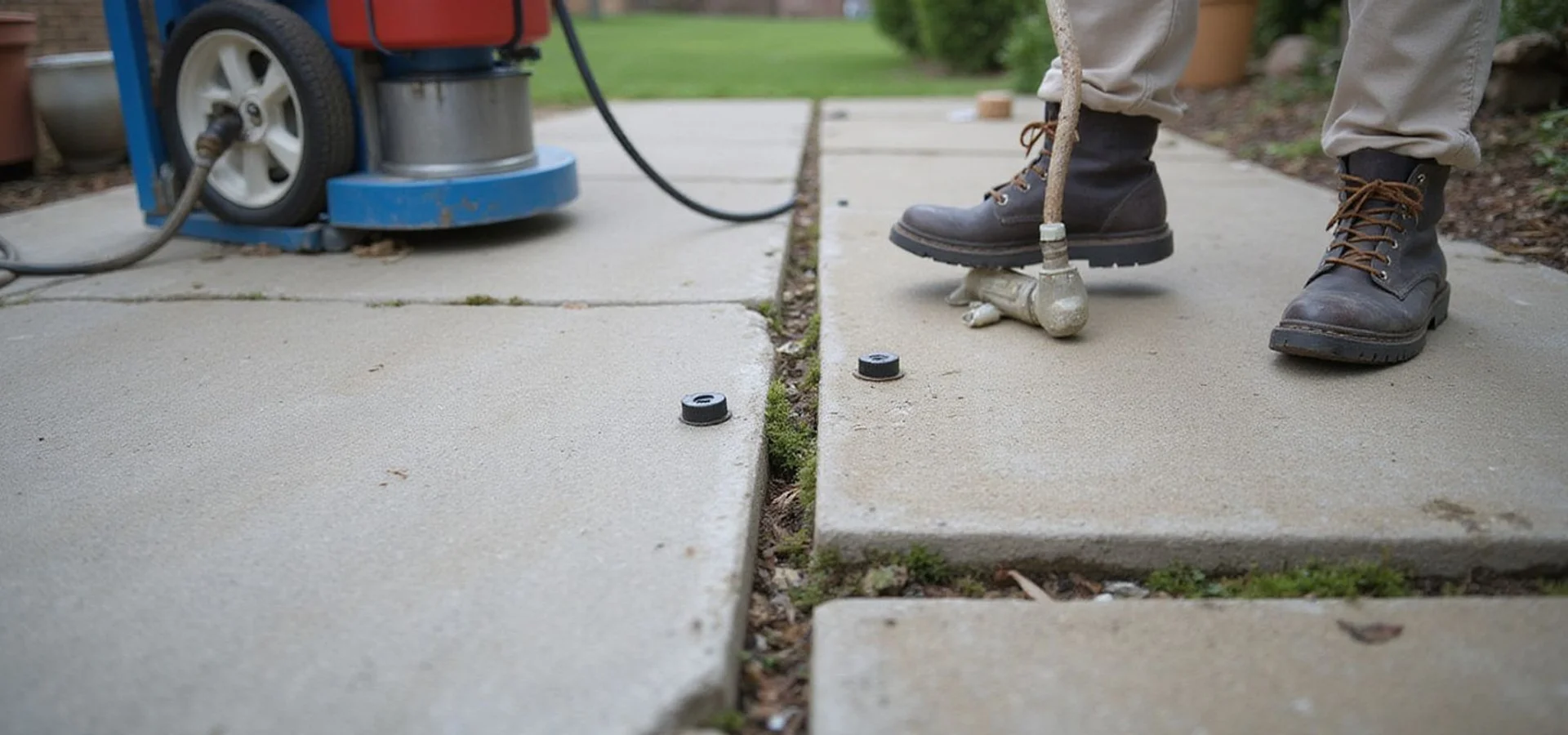
Lifting eligible walkways, patios, driveways, garage slabs, and other flatwork.

  • Sub-slab void and soil conditions assessed before lifting is proposed
  • Controlled polyurethane foam lifting with measured raise
  • Honest eligibility check: lifting versus replacement
  • Trip hazards and drainage fall corrected together

Free Preliminary Project Review

Tell us what you're noticing before you commit to anything.

Laser Manometer Elevation Survey

Multi-point measurements record exact floor differentials.

Written Scope With Exclusions

Quantities, depths, and permit notes stated in writing.

Registered Washington Contractor

Registration and bond are verifiable through L&I Verify.

Settled Flatwork Is a Soil Problem, Not a Concrete Problem

When a walkway panel drops or a driveway section sinks beside the garage apron, the slab itself is usually sound. What changed is what was underneath it.

Two mechanisms account for most of what we see. Washout: water moving through the soil beneath a slab carries fines away, and over time a void forms where support used to be. Poor compaction: fill placed under a slab at construction was never compacted adequately, and it consolidates under years of load and moisture cycling.

Both leave a slab bridging a gap. Eventually it drops into it, and you get the familiar result, a step at the joint, water pooling where it used to run off, and a trip hazard on a walkway people actually use. Flatwork sits outside the structure, but the soil behaviour is the same one our Seattle foundation repair work deals with daily.

Where the Water Usually Comes From

On Seattle properties, the washout source is frequently identifiable and frequently cheap to fix.

A downspout discharging at the edge of a driveway or walkway concentrates a roof’s worth of water into one small area, every time it rains. A leaking supply line or a cracked drain beneath a slab does the same thing continuously and invisibly. Surface water following the same path along a slab edge for a decade will hollow out the soil beside and beneath it.

We look for the source as part of the assessment, because filling a void while leaving the cause in place means doing the same work again in a few years. See foundation drainage for how we handle water routing, and the guide on why concrete settles and cracks in Seattle for the fuller picture.

How Polyurethane Lifting Works

Small ports are drilled through the slab in a pattern planned around the shape of the settlement. High-density polyurethane is injected beneath. It expands rapidly, filling the void, and once the void is filled, continued injection generates enough pressure to raise the slab.

The important word is controlled. The raise is taken in stages with elevation monitored as it goes. Pushing too hard too fast is how a slab you were trying to save ends up cracked. When the target elevation is reached, injection stops, the material cures within minutes, and the ports are patched flush.

Compared with mudjacking, which pumps a cementitious slurry through larger holes, foam has three practical advantages: it is considerably lighter, which matters when weak soil caused the problem; it needs smaller ports, so the surface is less marked; and it cures fast enough that a driveway is usually back in service the same day. Mudjacking remains a legitimate method. It is simply better suited to different conditions.

When Lifting Is the Wrong Answer

This is where we would rather lose the job than take it.

A slab broken into multiple pieces cannot be lifted as a unit. Severe spalling and surface deterioration mean you would be raising a slab that is failing anyway. Soil beneath that cannot support the slab once the void is filled will let it settle again. And where the settlement is severe enough that the finished elevation would still be wrong, lifting achieves very little.

In those cases replacement is the better value. It costs more up front and it is genuinely the cheaper answer over ten years. The lifting versus replacement guide sets out how to weigh the two.

What Lifting Actually Fixes

Trip hazards. A raised lip at a joint on a front walkway is a real liability, particularly on a property the public reaches. On uneven residential sidewalks and other public-facing walkways, ADA compliance can also come into play. Removing the hazard is straightforward and worth doing properly.

Drainage fall. Settled flatwork usually pools water, and often pools it against the house. Restoring the fall means surface water runs away from the building again, which has knock-on value for the foundation.

Door and gate clearance. Garage slabs and landings that have dropped affect how doors seat and seal.

Appearance and usability. A patio with a step through the middle of it is a patio people avoid using.

What This Is Not

Concrete leveling is flatwork. It is not foundation repair, and the two should not be confused in a proposal. A house footing carries structural load and settles for reasons that require underpinning; a walkway sits on soil and settles for reasons that require void filling.

Occasionally the same underlying cause affects both, poor fill across a lot, or a drainage failure that has been running for years. When we see evidence of that while working on flatwork, we mention it. Mentioning it is not the same as selling you an underpinning scope, and we keep those conversations separate.
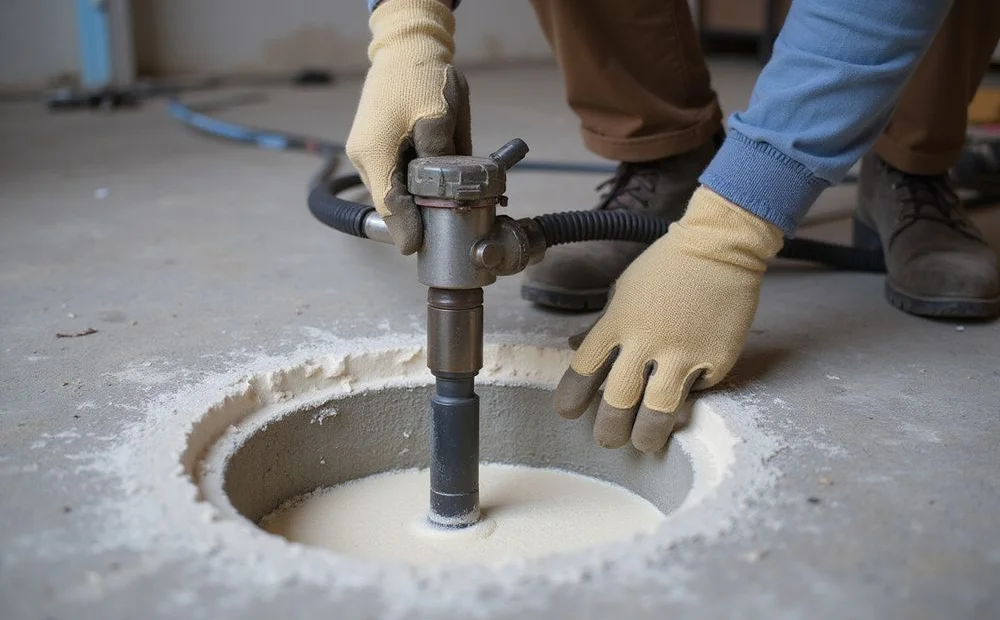
Injection gun fitted into a drilled port in a concrete slab while foam fills the void beneath

Transparent pricing

What Drives the Cost of Concrete Leveling?

We publish cost drivers rather than a single headline number, because a number without a scope behind it tells you nothing. Your written quote itemises quantities so you can see exactly what each line pays for.

Cost factor How it affects the quote
Slab area and panel count Square footage lifted and the number of separate panels involved is the primary quantity.
Lift height How far the slab has settled determines how much material is injected, which is the main consumable cost.
Void volume A large washed-out void takes considerably more material to fill than a slab that has settled with the soil beneath it.
Access Equipment positioning, hose runs, and whether the work area is reachable without crossing finished landscaping.
Cause correction Where a leaking line, failed downspout, or drainage problem caused the washout, correcting it is a separate scope line.
Replacement instead of lifting Where the slab is not a lifting candidate, demolition, disposal, forming, and a new pour cost substantially more.

We distinguish sourced estimate ranges from completed-invoice figures, and we do not publish unsupported local averages. Permit valuations are declared values, not final customer prices.

Our approach

Why Choose Us for Concrete Leveling

We check why it settled

Washout from a leaking line or a badly routed downspout will do it again. Finding the cause is part of the job, not an optional extra.

Eligibility stated plainly

Not every slab can be lifted. Where replacement is the better value we say so, even though lifting would have been the easier sale.

Controlled, measured raise

Lifting is taken in stages with elevation monitored. Too much pressure too fast cracks the slab you are trying to save.

Small ports, quick return to use

Foam injection uses small holes and cures fast, so a walkway or driveway is generally usable the same day.

Drainage fall corrected

Settled flatwork usually pools water. Restoring fall away from the building is part of the outcome, not a side effect.

Trip hazards taken seriously

A raised lip at a joint on a public-facing walkway is a liability. Removing it properly is straightforward and worth doing.

Work sequence

How Our Concrete Leveling Work Runs

Access, sequence, and restoration explained before anything starts, so you know what will happen on your property and in what order.

  1. Step 01

    Assess the slab and the void

    Slab condition, crack pattern, the extent of settlement, and whether a void has formed beneath from washout or poor compaction.

  2. Step 02

    Check eligibility honestly

    A badly broken slab or unsuitable underlying soil makes lifting the wrong call. We say that instead of lifting something that will fail again.

  3. Step 03

    Inject and lift under control

    Small ports drilled in a planned pattern, high-density polyurethane injected, and the raise taken gradually while elevation is monitored.

  4. Step 04

    Patch and correct fall

    Ports patched flush, the joint step removed, and surface fall checked so water runs away from the building rather than pooling.

Have a concrete leveling question about your property?

Send us the observations and photos you have. We'll tell you what an evaluation would examine and what it can't establish remotely.

Field records

Our Concrete Leveling Work

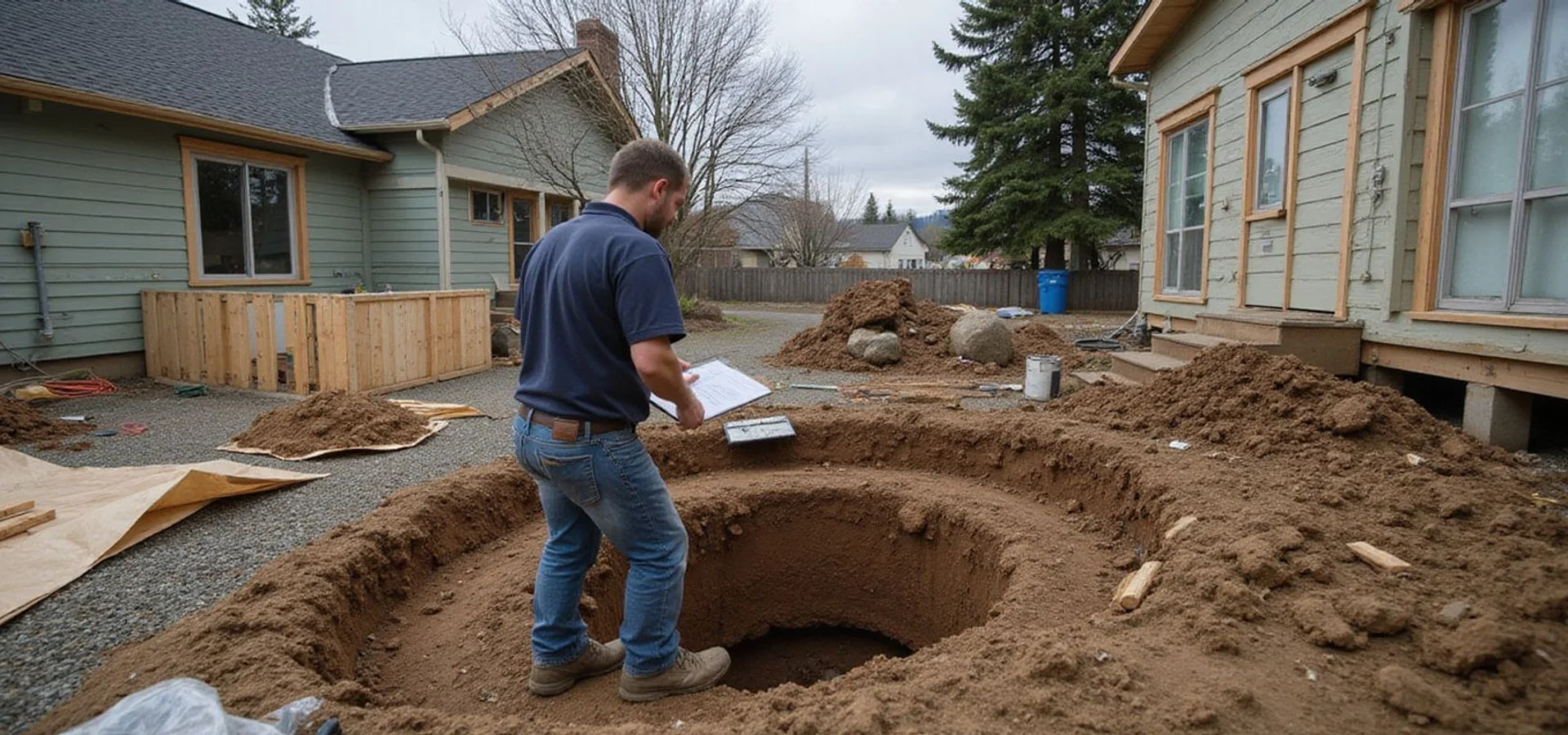
Most of this work disappears behind backfill and floor coverings. These images show the stages that matter while they are still visible.

Illustrative images showing typical work stages. They are not photographs of specific completed projects or before-and-after evidence.

Customer experience

What Customers Say About Our Concrete Leveling Work

Our front walkway had a step at the joint that had caught two people. It was level again by mid-afternoon and the ports are barely visible.

Homeowner, Beacon Hill

Beacon Hill, WA

They told us the garage apron could be lifted but the cracked section by the street should be replaced, and explained why. Both answers in one visit.

Homeowner, Federal Way

Federal Way, WA

The patio had been pooling water against the house for years. Lifting it fixed the fall as well, which we had not realised was part of it.

Homeowner, Tukwila

Tukwila, WA

Illustrative summaries of the service experience. They are not verified Google reviews and carry no star ratings. Real reviews replace them once our Google Business Profile is connected.

Frequently asked

Concrete Leveling Questions

Why did my driveway or walkway sink?

Nearly always because the support beneath it changed. A void forms from soil washout, often traced to a downspout discharging at the slab edge, a leaking supply or drain line, or surface water running along the same path for years. Poor compaction of fill at the time of construction is the other common cause, particularly on slabs poured over backfilled trenches. The slab itself is usually fine; what was under it is not.

Can any settled slab be lifted?

No. Lifting requires a slab that is structurally sound enough to be raised as a unit and soil beneath capable of supporting it once the void is filled. A slab broken into many pieces, badly spalled, or sitting on unsuitable ground is not a lifting candidate. Where that is the case we say so, because lifting a slab that will re-settle or crack apart is money spent to delay the same decision.

How does polyurethane foam lifting work?

Small ports are drilled through the slab in a planned pattern. High-density polyurethane is injected beneath, where it expands to fill the void and then, under continued injection, generates enough pressure to raise the slab. The raise is taken gradually while elevation is monitored, so the lift is controlled rather than sudden. The material cures within minutes.

How does it compare to mudjacking?

Mudjacking injects a cementitious slurry through larger holes. It is a long-established method and it works, but the slurry is heavy, which is a real consideration when the reason for settlement was weak soil in the first place, and it needs bigger holes and longer cure time. Polyurethane foam is lighter, uses smaller ports, and cures fast enough that a driveway is usually usable the same day.

How long before I can use the surface again?

Usually the same day for foot and vehicle traffic. Polyurethane reaches most of its strength within minutes of injection, which is one of its main practical advantages over slurry methods.

Will the slab settle again?

Not from the void that was filled. It can settle again if the cause is still active, a leaking line still washing out soil, or a downspout still discharging at the same point. That is why we look for the cause rather than just filling the gap. Correcting the water source is frequently a small job compared with lifting the slab a second time.

Can you lift a settled garage slab or steps?

Often yes. Garage slabs, steps, landings, patios, walkways, and driveway panels are all common lifting candidates. Interior slabs can sometimes be lifted too, though floor coverings and what sits on the slab need to be considered. We assess each element rather than assuming one answer covers the whole property.

Is this related to foundation settlement?

Usually not directly. Flatwork sits on soil and settles when that soil moves; a house footing carries structural load and its settlement is a different problem with a different repair. Occasionally the same underlying cause, poor fill, a washout, or drainage failure, affects both, which is why we note what we see even when you only asked about the driveway.

Still have a question?

Send us what you're noticing and we'll tell you plainly what it might mean and what an evaluation would examine.

Ask us about your property

Next step

Ready to talk about concrete leveling?

Tell us what you're noticing and where the property is. We'll explain the likely next step and what an evaluation would cover.

Free preliminary project review. Any charge for an on-site evaluation is explained before booking.

Request a Quote