A Sump Is the Last Stage, Not the Whole System
A sump pump does one thing: it moves collected water out of a basin. It does not collect the water, it does not reduce how much arrives, and it does not decide where the water goes afterward. Treating it as a complete answer is one of the more common misconceptions we correct on Seattle foundation repair calls. Those are the drainage and discharge parts of the system, and a pump installed without attention to them is a pump working harder than it should against a problem nobody addressed.
That is why we scope sump work alongside foundation drainage and basement waterproofing rather than as a standalone product. The pump is the last stage of a chain, and the chain is what has to work.
Check Gravity Before Buying a Pump
The first question is whether a pump is needed at all.
On a sloped lot, a drain line with consistent fall can daylight at a lower point on the property. That is simpler, costs less, needs no electricity, and has no failure mode involving a power cut in a storm. Where it is available, it is the better system.
Valley-floor properties in Renton, Kent, and Tukwila usually have no such option, because there is nowhere lower to send the water. There a sump is genuinely required. We establish which situation applies before quoting equipment.
Sizing Against Real Conditions
Two numbers matter and only one of them is on the box.
Inflow. How much water arrives at the basin, how quickly, and under which conditions. A basement that takes on a trickle through a normal week and a torrent during a sustained atmospheric river event needs to be sized for the second.
Total dynamic head. A pump’s advertised flow rate is measured at zero lift. Once water has to be raised several feet and pushed along a horizontal run, actual delivery drops substantially. Sizing against the headline number rather than the head-corrected number is how a pump that looked adequate on paper fails on the night it mattered.
Basin volume matters too. A basin that is too small means the pump cycles constantly, and cycling is what wears motors and switches out.
The Components That Make It Reliable
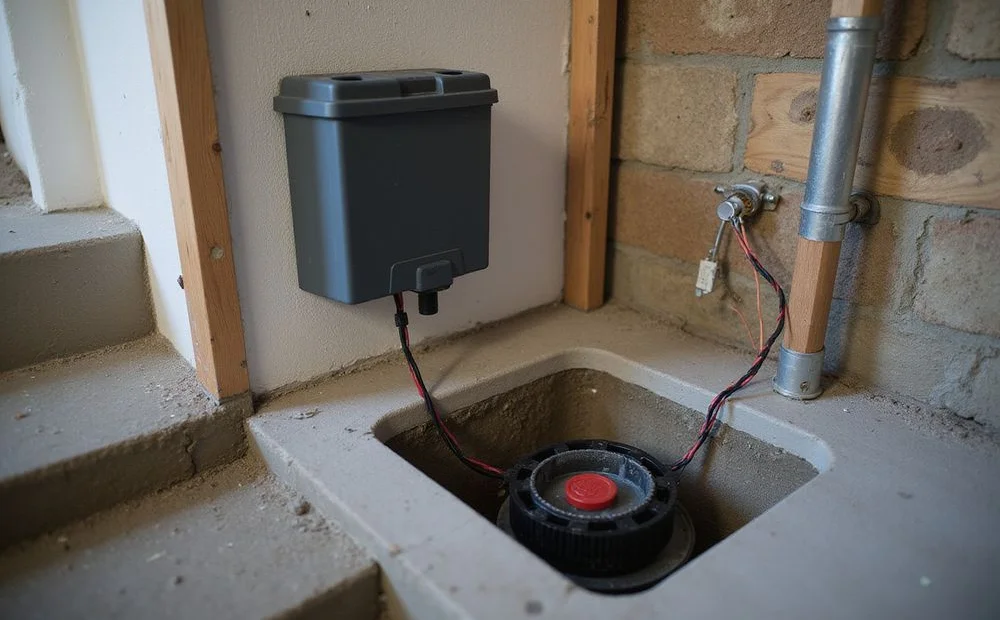
The basin. Correctly sized, set into the slab, with tie-in points for perimeter drainage and a sealed lid. The lid is not cosmetic: it limits evaporation, controls humidity and radon entry, and stops debris falling in and jamming the float.
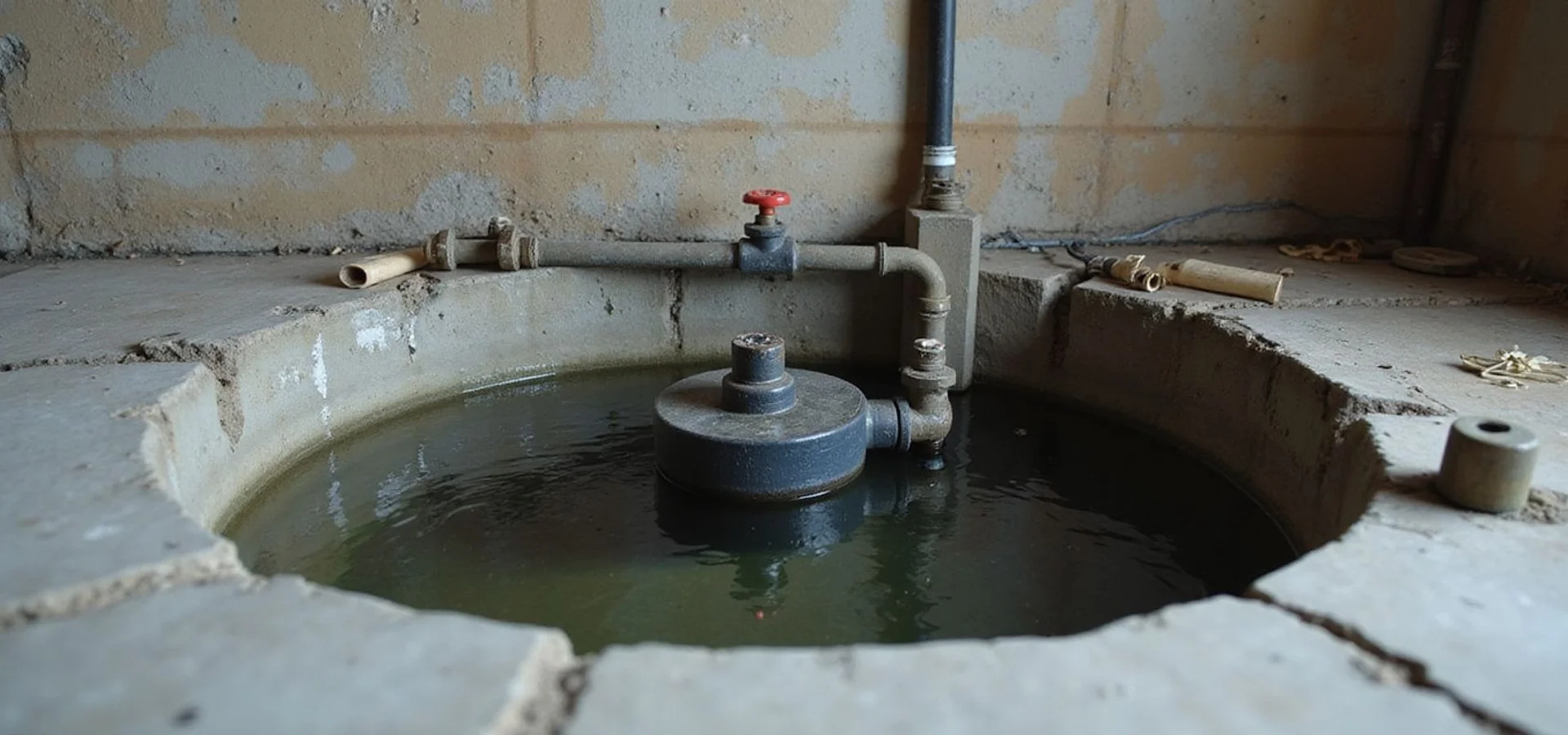
The pump. Submersible, sized to the head-corrected requirement. Cast-iron bodies dissipate heat better than thermoplastic and generally last longer.
The float switch. A frequent failure point. Vertical and tethered switches suit different basin geometries, and the switch needs clearance to move without catching.
The check valve. Stops the water standing in the vertical discharge run from draining back into the basin at shut-off. Without one, part of every cycle is the pump re-pumping its own output.
Battery backup, where justified. Heavy rain and power cuts arrive together. A backup system with a secondary pump matters most in exactly the conditions that cause outages. We recommend it on risk and consequence, not as a default upsell.
Discharge Planning
This is where sump installations most often fall short, and it is almost always fixable.
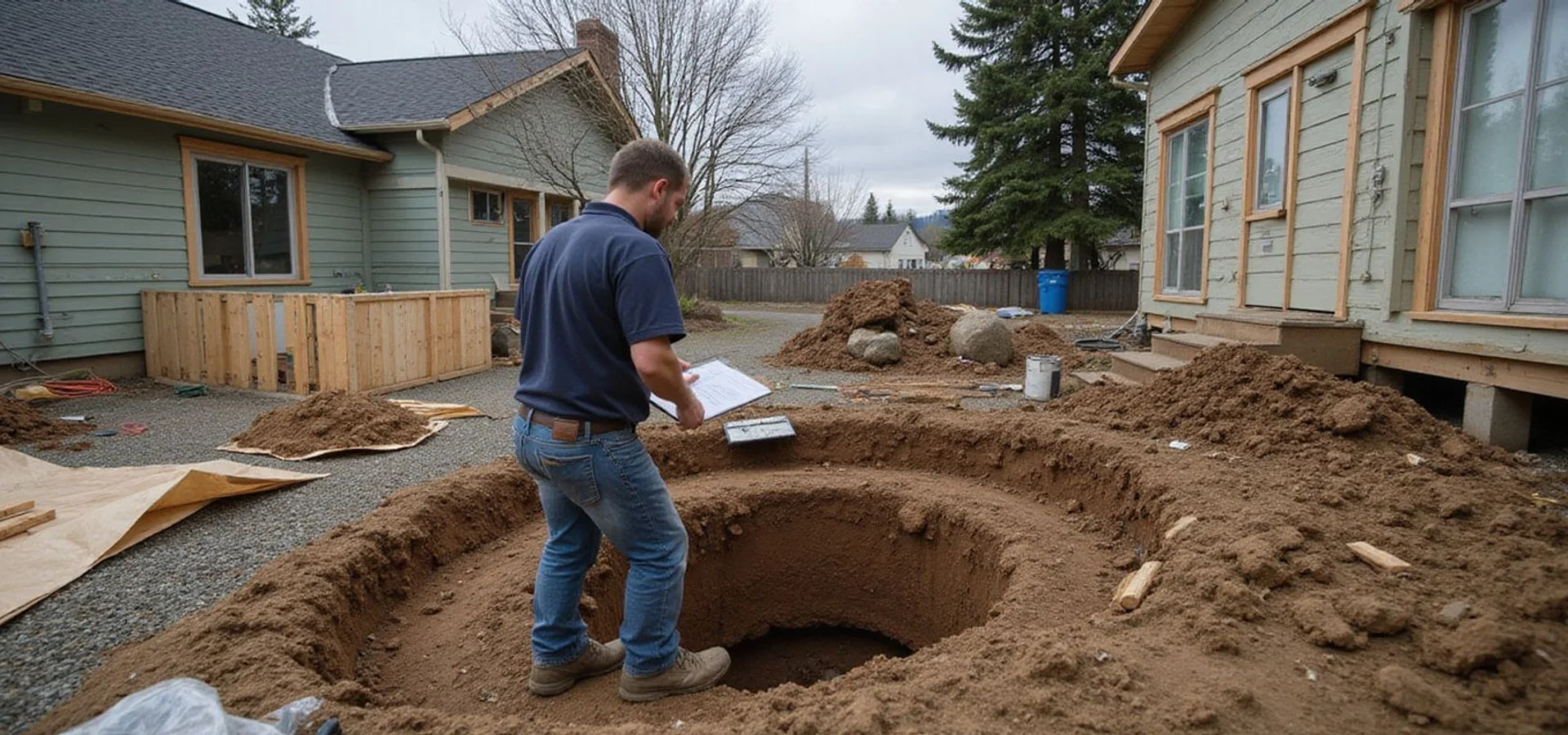
The discharge must carry water far enough from the foundation that it does not soak back through the soil and return to the perimeter drain. A line that ends four feet from the wall creates a loop: the pump runs, the water returns, the pump runs again. Owners interpret that as an undersized pump and buy a bigger one, which cycles faster and fails sooner.
The route also needs to avoid freezing, avoid blockage, and avoid creating a problem for a neighbouring property. Where a tightline to an approved discharge point is required, that may involve a utility permit, which we identify before quoting.
Maintenance You Should Actually Do
Test it. Pour water into the basin until the float lifts and confirm the pump starts, moves water, and shuts off cleanly. Do this before each wet season rather than discovering the answer during a storm.
Check that the basin has not silted up, that the check valve holds, that the discharge outlet is clear, and, if you have backup, that the battery is still holding charge. Expect roughly seven to ten years from a good submersible, less if it runs heavily.
We state this plainly rather than implying an installation is permanent. A pump is a mechanical device with a service life, and knowing that is what lets you replace it on your schedule instead of the weather’s.