
No Headline Figure for Basement Waterproofing Cost in Seattle, and Here Is Why
You know how frustrating it is to get wildly different pricing for the same home repair.
When researching basement waterproofing cost, Seattle property owners often tell us they are confused when one contractor quotes $3,000 and another asks for $15,000. The truth is that these differences rarely mean someone is overcharging you. Pricing varies because contractors are proposing completely different solutions for your home.
Seattle properties sit on glacial till and heavy clay soils, meaning hydrostatic pressure dictates a highly specific approach. Our basement waterproofing service page covers what each system does to relieve this pressure.
Before pricing anything, it is worth being clear on how the water is actually getting in, which our guide on water entering a basement sets out pathway by pathway. Let us look at the 2026 data driving these costs and outline how to read a proposal properly.
System Selection
This choice represents the largest fork in the road for your budget.
Targeted Crack or Penetration Treatment
Where the problem is a discrete entry point, polyurethane injection addresses the leak directly. This remains by far the smallest scope of work available. We see 2026 prices for simple foundation crack repairs running between $500 and $2,500 in the local area. Fixing a crack is highly cost-effective when it is the correct answer for your foundation.
Interior Perimeter Drainage
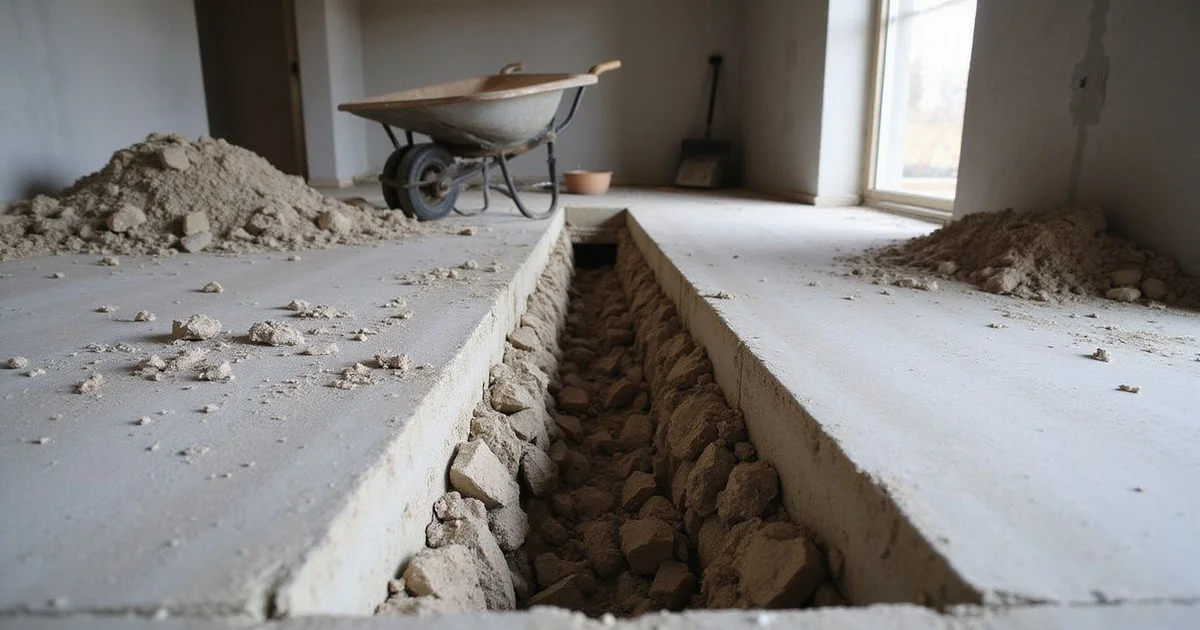
Crews cut a channel at the base of the wall, bed perforated pipe in aggregate, restore the slab, and route water to a sump basin. This approach remains the most common fix for hydrostatic entry at the cold joint. Recent 2026 data shows that for interior drainage cost, Seattle contractors average between $120 and $180 per linear foot. The heavy clay soils in our region often make this interior approach safer and more predictable than outside digging.
Exterior Excavation and Membrane
Excavating to full foundation depth allows a crew to apply a waterproof membrane to the exterior face and install a new footing drain. This method is the most thorough, but it is also the most disruptive and expensive option. You can expect exterior excavation projects to range from $15,000 to over $40,000 depending on the depth and accessibility. Soil replacement and backfilling add significant labor hours.
Drainage-Only Solutions
Sometimes the most honest answer is that your basement does not need a heavy construction project at all. Correcting yard grading, routing downspouts underground, or installing a shallow yard interceptor drain can resolve moisture issues for a fraction of the cost. A simple downspout extension project might only cost $150 to $350 per spout.
Affected Length

Linear feet of wall or floor perimeter treated is the primary quantity on most interior and exterior scopes.
Treating one specific wall where water is entering costs much less than treating a full perimeter. An average Seattle basement might have 120 linear feet of perimeter, but you might only need 30 feet addressed. Whether a partial treatment works depends entirely on the water pathway.
- Targeted entry: If water enters along one elevation because of a specific exterior slope, partial treatment makes sense.
- Rising water tables: When the groundwater rises around the whole building, partial treatment simply moves the entry point to the next weakest spot.
We always check to see if a proposal states the exact linear footage and specifies which walls are included. A vague promise to “waterproof the basement” is not a measurable quantity.
Slab Breaking and Restoration
Interior drainage requires cutting the floor slab around the perimeter, excavating a trench, installing the pipe, and restoring the concrete.
That concrete work involves intense labor and heavy materials, making it a major line item. Breaking concrete also generates dust and debris that crews must carefully manage inside the house.
Our crews see disposal costs adding up quickly, as King County charges specific construction and demolition landfill fees for heavy materials like concrete. Moving tons of old concrete out of a basement and hauling it away is expensive.
Pro Tip: Removing and replacing any existing finished floor coverings adds an extra expense. Contractors frequently exclude this finish work rather than including it in the base bid, so you should always confirm who is responsible for the final floor coverings.
Excavation, for Exterior Work
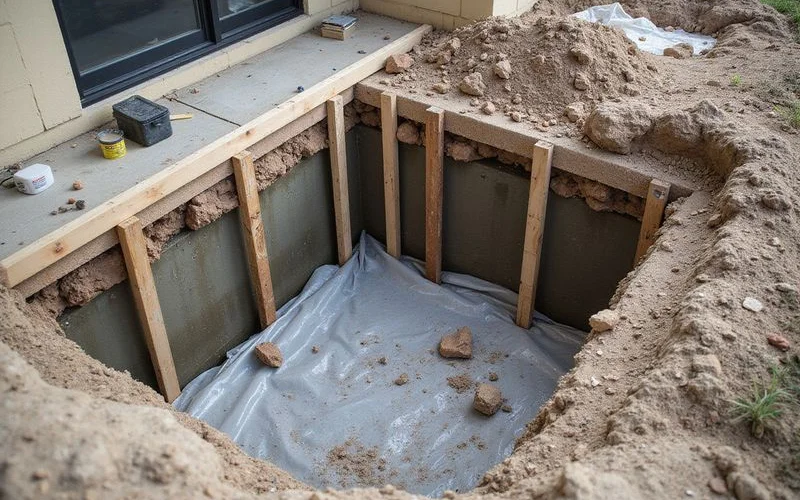
Exterior approaches involve digging a deep trench down to the base of the foundation along the affected elevation.
Several physical factors drive the cost during this phase:
- Total Soil Volume: The sheer amount of dirt removed directly impacts labor.
- Machine Access: Hand digging drastically increases the labor bill compared to using an excavator.
- Spoils Management: Finding space to stockpile dirt on site saves money over hauling it away.
On a typical narrow Seattle lot with a retaining structure on the property line, full exterior excavation can be physically impossible regardless of your budget. This strict physical constraint frequently forces homeowners to choose an interior drainage approach.
Discharge Arrangement
Where the collected water eventually goes is a major cost variable that is easy to overlook when comparing quotes.
A site with enough natural slope to use a gravity outlet daylighting at a lower point is the simplest and cheapest arrangement. Gravity drains have no mechanical parts and cannot fail during a power outage.
Properties without a natural slope require a sump basin and a pump to push the water out.
- Base Installation: A completely new sump pump system installed from scratch in 2026 averages $1,200 to $1,800 locally.
- Pump Types: Submersible cast-iron pumps cost more than pedestal models but operate quietly underwater and handle higher volumes.
- Backup Systems: Adding a battery backup system is highly recommended in our region to protect against winter storm outages.
See sump pump systems for a detailed breakdown of what that mechanical setup involves. Our team advises reviewing the discharge pipe route to ensure it includes proper freeze protection.
Everything Else
There are several other moving parts that dictate the final number on your estimate. Understanding these waterproofing price factors will help you evaluate the true scope of work.
| Driver | Effect |
|---|---|
| System selection | Largest single cost fork; injection is minor while full exterior excavation is massive. |
| Linear feet treated | The primary measurement quantity for pricing both interior and exterior systems. |
| Slab cutting and restoration | Real concrete work that requires heavy labor and specialized disposal fees. |
| Excavation and reinstatement | The dominant cost on exterior approaches, especially if hand digging is required. |
| Discharge arrangement | A free gravity outlet versus a pumped tightline makes a substantial difference. |
| Obstruction removal | Moving finished walls, storage, and utility lines along the working perimeter adds time. |
| Access restrictions | Machine-accessible yards cost significantly less than tight, hand-dug spaces. |
| Local Permits | Required where a municipal discharge connection or major structural work is triggered. |
Reading a Proposal
Look closely for the exact system named, the precise linear feet stated, the discharge arrangement described, and the specific exclusions listed.
Common exclusions that genuinely belong in the excluded column include mold remediation, finished drywall reinstatement, landscaping replacement, and structural wall repair. A proposal excluding those trades is not incomplete, but rather honest about its scope. A quote that is completely silent on those topics has simply deferred a difficult conversation until later.
You cannot compare two quotes proposing different systems until you know exactly why each contractor chose their method.
- Ask each estimator what specific water pathway they identified.
- Request the evidence they used to support that conclusion.
- Compare the physical quantities listed in each bid.
That detailed answer is far more informative than comparing the bottom-line totals. Throwing out any quote that lacks clear measurements is the smartest move you can make.
What We Will Not Publish
We do not publish a generic local average for a basement waterproofing cost in Seattle, and we refuse to blend loose estimate ranges with actual completed-invoice figures.
Where we do quote a specific figure, we state the source, the date, the exact scope, and the exclusions. A dollar sign without those details is just decoration designed to anchor your expectations. In this trade, anchoring a price before anyone has inspected the actual basement is a disservice.
Our office is ready to help. Contact us today to schedule a site visit so you can get a customized, accurate evaluation for your property.