

Why This Matters Before You Sign
Foundation work is expensive, largely buried once complete, and hard for a homeowner to evaluate afterwards. Those three facts together mean the checks you make before signing carry more weight than in almost any other trade.
Registration verification is the cheapest of those checks. It takes a few minutes, it is free, and it is public. It does not tell you whether a contractor does good work, but it tells you whether they are operating within the basic legal framework, and it occasionally turns up something that ends the conversation.
Do it for every contractor you consider, including Seattle Foundation Repair. Any contractor who is uncomfortable with you checking is telling you something.
What Washington Requires
Washington operates a contractor registration regime administered by the Department of Labor and Industries. Registration requires the contractor to hold a surety bond, carry liability insurance, and include the registration number in advertising and in offers to perform work.
Current bond requirements are $30,000 for general contractors and $15,000 for specialty contractors. If you encounter older guidance citing lower figures, it is out of date.
This is a registration system, not a professional licensing system. That distinction is important and it is frequently blurred in marketing.
Registration Is Not What People Assume
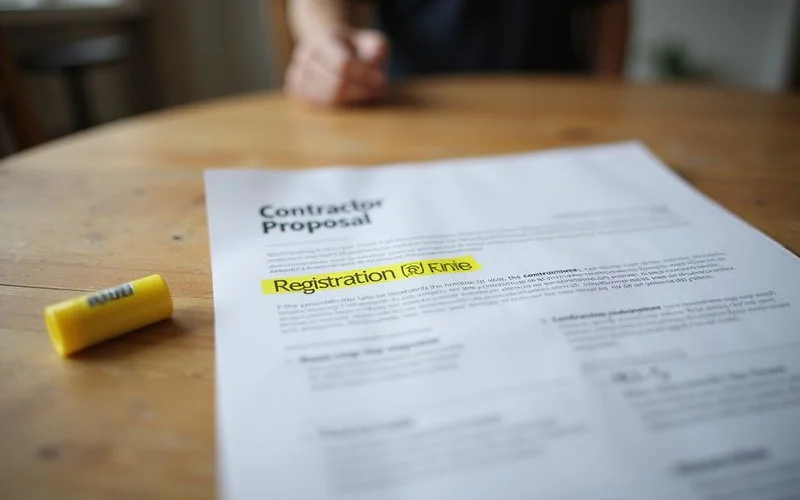
Registration means a business has met administrative requirements: it has a bond, it has insurance, it has registered. That is genuinely useful. It is also considerably less than most homeowners assume.
It is not an engineering license. Contractor registration involves no assessment of engineering competence. Where a foundation project requires engineered design, that requires a licensed engineer, and registration says nothing about it.
It does not certify technical competence. No examination of structural knowledge is involved.
It does not guarantee workmanship. The bond exists as a limited recovery mechanism for certain claims. It is not a warranty.
The bond does not guarantee you will be made whole. The bond is a fixed pool covering all valid claimants against that contractor. A single significant project can exceed it, and multiple claimants share what is available.
Being clear about this is more useful than letting a registration number do work it cannot do.
How to Actually Check
The Washington L&I “Verify a Contractor” tool lets anyone look up a contractor by business name or registration number, at no cost.
What to look at:
Status. Active, expired, or suspended. Expired registration is a stop sign, not a technicality.
Effective dates. How long the registration has been continuously held. A registration opened last month for a business claiming twenty years of experience warrants a question, there may be a legitimate explanation involving a business restructure, and it is worth asking.
Bond and insurance. Both should be current. A lapsed bond means the registration requirement is not being met.
Claims and infractions. Look for pattern rather than incident, and remember that a filed claim is a dispute record rather than an established finding.
The business name. It should match the name on the proposal, the invoice, and the advertising.
The Name Consistency Check
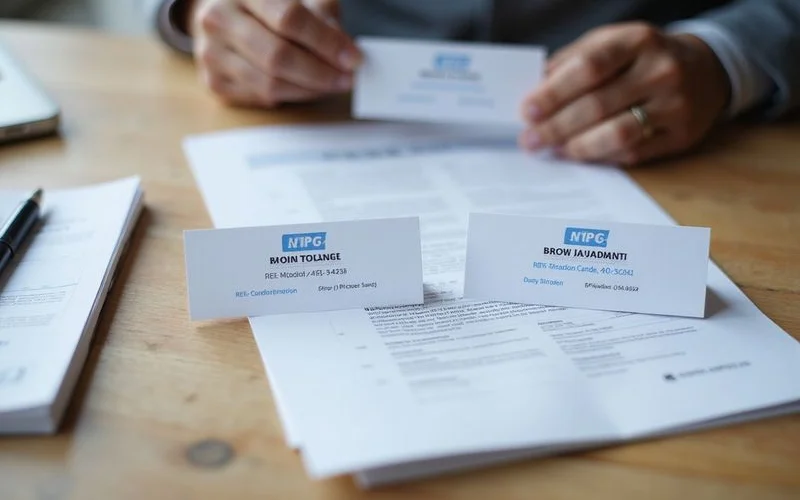
This one catches more problems than the rest combined and almost nobody does it.
The registered business name, the name on the proposal, the name on the invoice, the name on the vehicle, and the name in the advertising should be the same entity. Where they differ, ask why. There are legitimate explanations, a trading name, a recent rebrand, and there are less legitimate ones.
The registration number should appear in advertising and in offers to perform work. If you cannot find it on a proposal, that is worth noting.
Questions Worth Asking Alongside
Registration verification is one part of vetting. Three other questions carry at least as much weight for foundation work specifically.
“Can I see a redacted example proposal?” A scope with quantities, depths, purpose per line item, and stated exclusions tells you far more about how a company operates than any credential. Our guide on comparing foundation repair quotes explains what to look for.
“Who does your engineering when a project needs it?” A contractor who works with engineers routinely, and who can say when a project falls outside a prescriptive approach, is describing a real working practice.
“What are your warranty terms, in writing?” Coverage, exclusions, duration, and transferability. Warranty terms vary enormously and the differences matter.
What Verification Cannot Tell You
It cannot tell you whether a contractor will diagnose your problem correctly, whether they will recommend a method that suits your conditions, whether their crews will do careful work, or whether they will still be trading when a warranty claim arises.
Those come from the proposal, from how the diagnosis was conducted, and from whether the company can explain its reasoning when questioned. Registration is the floor, not the standard.
Which is why we would rather you judged us on the written scope than on the registration number, but check the number anyway, for every contractor you speak to.