
Two Different Answers to the Same Symptom
A settled walkway, a sunken driveway panel, a patio that now pools water. Two routes: raise what is there, or take it out and pour new.
The right answer depends on the condition of the slab, the condition of the soil beneath it, and what you were planning to do with the surface anyway. Our concrete leveling assessments establish the first two before recommending either.
What Lifting Involves
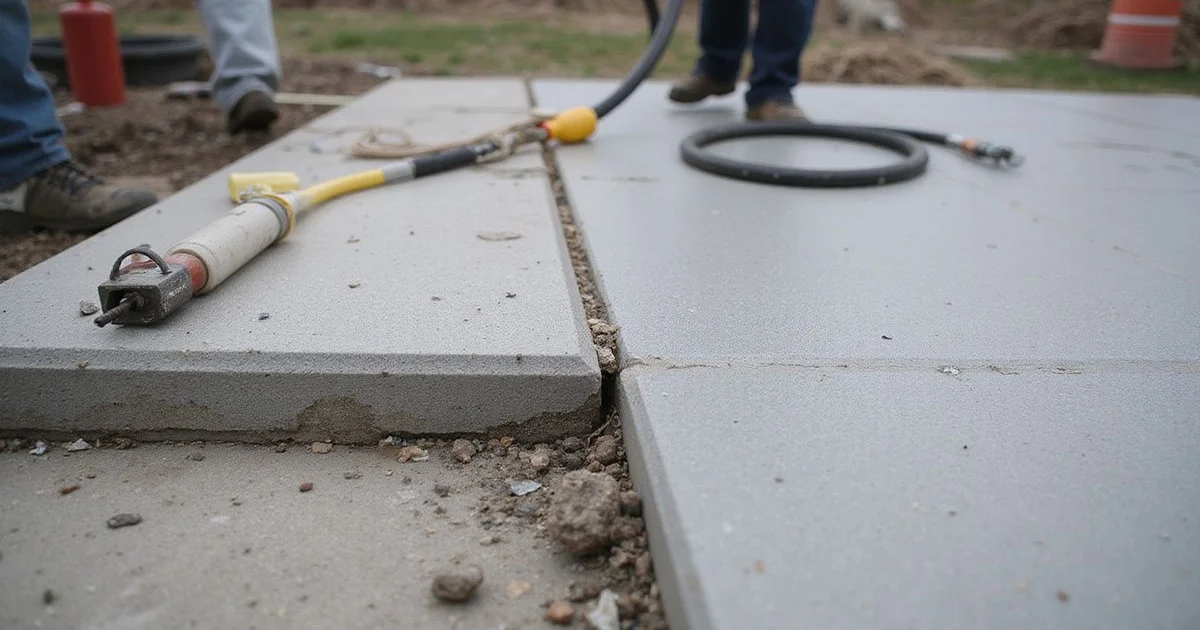
Small ports are drilled through the slab in a pattern planned around the shape of the settlement. High-density polyurethane is injected beneath, expanding to fill the void and then, under continued injection, generating enough pressure to raise the slab.
The raise is taken gradually with elevation monitored throughout, so the lift is controlled rather than sudden. The material cures within minutes, and the ports are patched flush.
Compared with mudjacking, which pumps a cementitious slurry through larger holes, polyurethane is lighter, which matters when weak soil caused the settlement in the first place; uses smaller ports, so the surface is less marked; and cures fast enough that a driveway is usually back in service the same day. Mudjacking remains legitimate and suits some conditions; it is simply a different tool.
What Replacement Involves
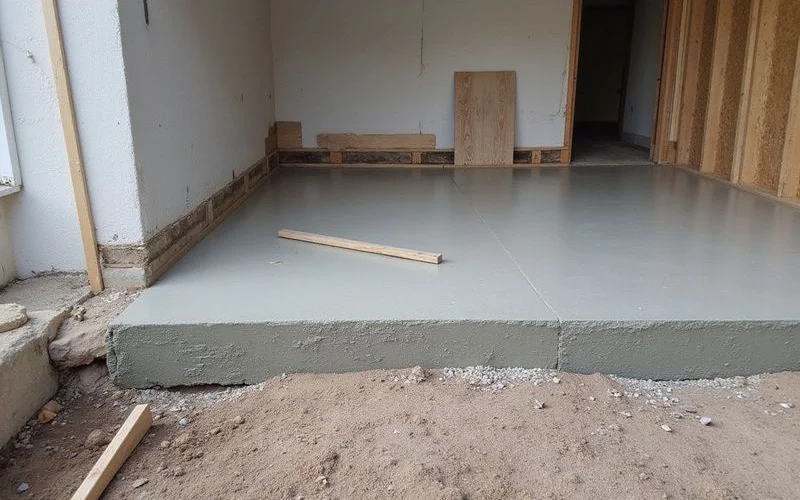
Demolition and removal of the existing slab, preparation and compaction of the sub-base, forming, pouring, finishing, and curing.
It costs considerably more, takes longer, and the surface is out of use during curing. It also produces a slab on a properly prepared base, which lifting cannot deliver. Lifting fills a void beneath an existing slab; it does not re-engineer what is under it.
Deciding Between Them
| Lifting | Replacement | |
|---|---|---|
| Cost | Lower, often substantially | Higher |
| Duration | Hours to a day | Days, plus curing |
| Surface usable | Generally same day | After curing |
| Disruption | Minimal; small ports | Demolition, removal, access for a pour |
| Requires | Sound slab, supportable soil | Nothing of the old slab |
| Addresses sub-base | Fills the void only | Full sub-base preparation |
| Appearance | Existing surface retained, ports patched | New surface, may not match adjacent |
| Right when | Slab sound, void formed, soil adequate | Slab broken, soil unsuitable, or replacing anyway |
When Lifting Is Not the Answer
Four conditions that rule it out
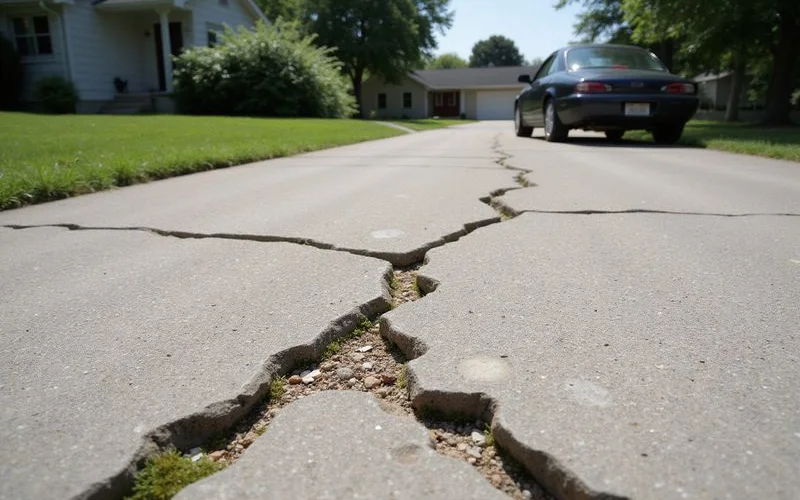
The slab is broken into multiple pieces. It cannot be raised as a unit; the pieces move independently and the result is worse than before.
The surface is badly deteriorated. Heavy spalling and exposed aggregate mean you would be raising a slab that is failing regardless.
The soil cannot support it. Filling the void does not improve bearing capacity. Where the underlying material is inadequate, the slab settles again.
The finished elevation would still be wrong. Where settlement is severe or the original grade was poor, lifting to the original position does not solve the actual problem.
We will say when any of these apply, even though lifting would have been the easier sale. Lifting a slab that is going to fail again is a repair with a countdown on it, and the second conversation is more expensive than the first.
The Cause Still Matters
Whichever route you take, what caused the settlement has to be dealt with.
If a downspout discharging at the slab edge washed out the soil, lifting the slab and leaving the downspout means doing it again in a few years. If a leaking line is the source, replacement over the same leak fails identically.
Correcting the water source is usually a small job relative to either option, and it is the part that determines whether the fix holds. Our guide on why concrete settles and cracks in Seattle covers the common sources, and foundation drainage covers correcting them.
Practical Considerations
Trip hazards. A raised lip at a joint on a front walkway is a genuine liability, particularly where the public reaches the property. Lifting removes it quickly and inexpensively, which frequently makes it the right call on that basis alone.
Drainage fall. Settled flatwork usually pools water, and often pools it against the house. Restoring fall is a real benefit of lifting beyond the appearance.
Matching. New concrete will not match aged adjacent concrete. Where appearance across a large area matters, that argues either for lifting, or for replacing enough that the difference is not visible.
Partial approaches. Frequently the right answer is mixed, lift the sound panels, replace the broken one. A contractor who assesses panel by panel rather than pricing the whole driveway one way is giving you the more useful answer.