
Air Is the Third Moisture Pathway
Crawl space moisture arrives three ways, and they need separating before anything is bought.
Bulk water is liquid water from outside, runoff, a rising water table, a leaking line. It is a drainage problem.
Ground vapour is moisture evaporating from bare soil into the crawl space air, continuously and in larger volume than most people expect. It is a vapour retarder problem.
Humid air is moisture carried in by outside air or generated within the space, condensing on cool surfaces. It is an air management problem, and it is what dehumidification addresses.
A dehumidifier only helps with the third. Installing one while the first two are unaddressed produces a machine working permanently against an uncorrected source. Our moisture control approach deals with them in order.
Why Our Climate Complicates the Ventilation Logic
Older crawl spaces were built vented on the reasoning that outside air would carry moisture away. In a dry climate that logic works.
In the Pacific Northwest it works less consistently. In summer, warm humid outside air enters a cool crawl space, its temperature drops, its relative humidity rises, and it can deposit moisture rather than removing it. That is why some crawl spaces are damper in August than in February, which surprises people who expect moisture to be a winter problem.
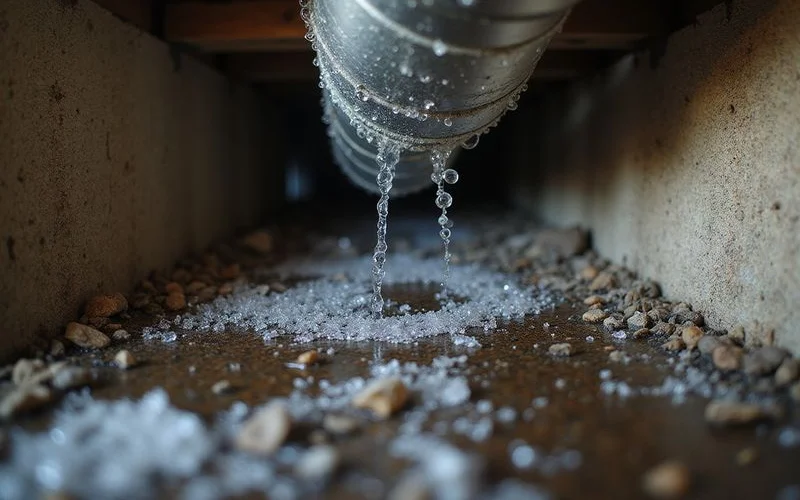
This is also why the common summer symptom is condensation on cool surfaces, ducts, pipes, and framing near vents, rather than water on the ground.
How Dehumidification Works
A dehumidifier draws air across a cold coil, condensing moisture out of it, then returns drier air to the space. The extracted water is routed to a drain or pumped out.
Three things determine whether it works well.
Capacity matched to the space. Volume, existing moisture load, and how well sealed the space is. An undersized unit runs continuously without reaching target; an oversized one short-cycles.
Condensate routing. The water has to go somewhere reliable. A condensate line to a suitable drain or a condensate pump, routed so it cannot back up or freeze.
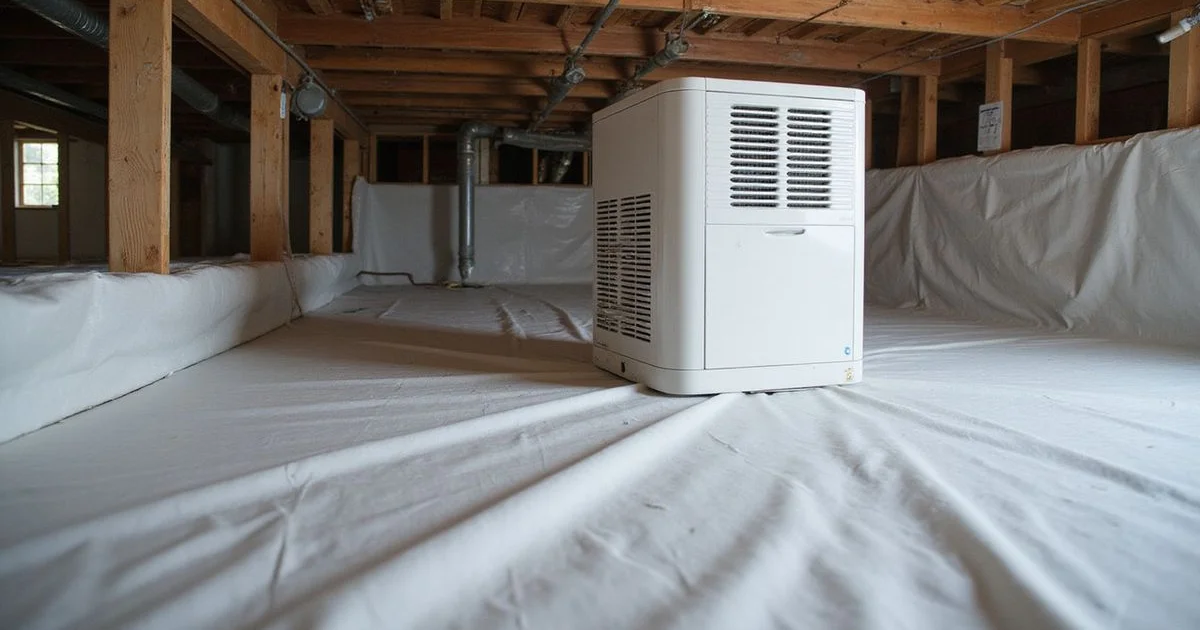
A sealed space to work in. A dehumidifier in a vented crawl space is dehumidifying the outdoors, which is a losing proposition. This is why dehumidification generally follows encapsulation rather than standing alone.
Measure Before, Measure After
The sequence we use
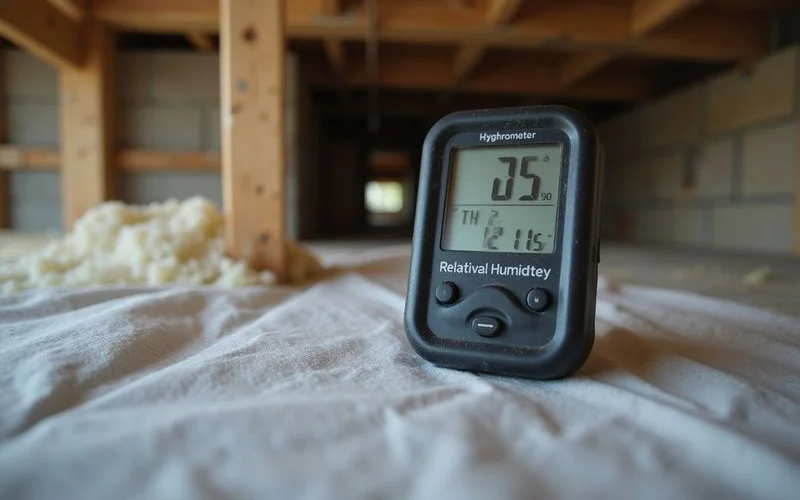
Measure relative humidity during the evaluation, as a baseline.
Correct bulk water. Install the vapour retarder or encapsulation system.
Measure again. If readings are acceptable, stop, no dehumidifier.
If readings remain elevated, size a unit against the space and install it with proper condensate routing. Then measure once more.
This matters commercially. A dehumidifier is meaningful capital cost plus an ongoing electricity draw. Many Seattle crawl spaces come into an acceptable range with a properly detailed liner and corrected drainage alone.
Including a unit in every project regardless of readings is common practice in this trade. We do not do it, and the before-and-after readings are why we can tell you whether yours needs one.
What Humidity Target Means
We are deliberately not publishing a single number as though it applied universally, because the useful target depends on the space.
Two objectives drive it. Wood moisture content should stay below the level decay fungi require, which is a function of the relative humidity the wood is exposed to over time. And air should not reach dew point at the surfaces present in the crawl space, which depends on how cool those surfaces are, a space with uninsulated ducts running through it has a different condensation threshold than one without.
Measuring surface temperatures alongside air humidity gives a target that means something for your crawl space rather than a number copied from a brochure.
Where It Sits in the Order of Work
Drainage first, because no air system manages standing water. Then the liner, because ground vapour is usually the largest source. Then, if readings warrant it, dehumidification for the remainder.
Reversing that order produces a machine that runs constantly and a homeowner who concludes dehumidifiers do not work. They work fine, on the problem they are designed for.
Our guide on vapour barrier versus encapsulation covers the step that usually comes before this one, and explains why a liner is not a substitute for drainage.