
Two Points on the Same Scale
These are not competing philosophies. They are two levels of the same intervention, and the right one depends on what your crawl space is actually doing.
Both address ground moisture. One does it partially and inexpensively; the other does it comprehensively and costs more. Neither replaces drainage, which is the point people most often get wrong. Our crawl space moisture control assessments identify the pathway first and then size the intervention to it.
The Ground Vapour Retarder
A reinforced sheet laid across the crawl space soil, with overlapped and sealed seams, covering the ground and typically running a short distance up the perimeter and around pier bases.
What it addresses. Moisture vapour evaporating from bare soil. In most Puget Sound crawl spaces this is the single largest moisture source, and covering it makes a substantial difference on its own.
What it does not address. Bulk water. Moisture entering through foundation walls. Humid outside air coming in through vents.
Material matters. Reinforced, puncture-resistant sheet, not builder’s plastic. Anyone who works in that crawl space later will kneel on it and drag equipment across it, and an unreinforced sheet tears within a year.
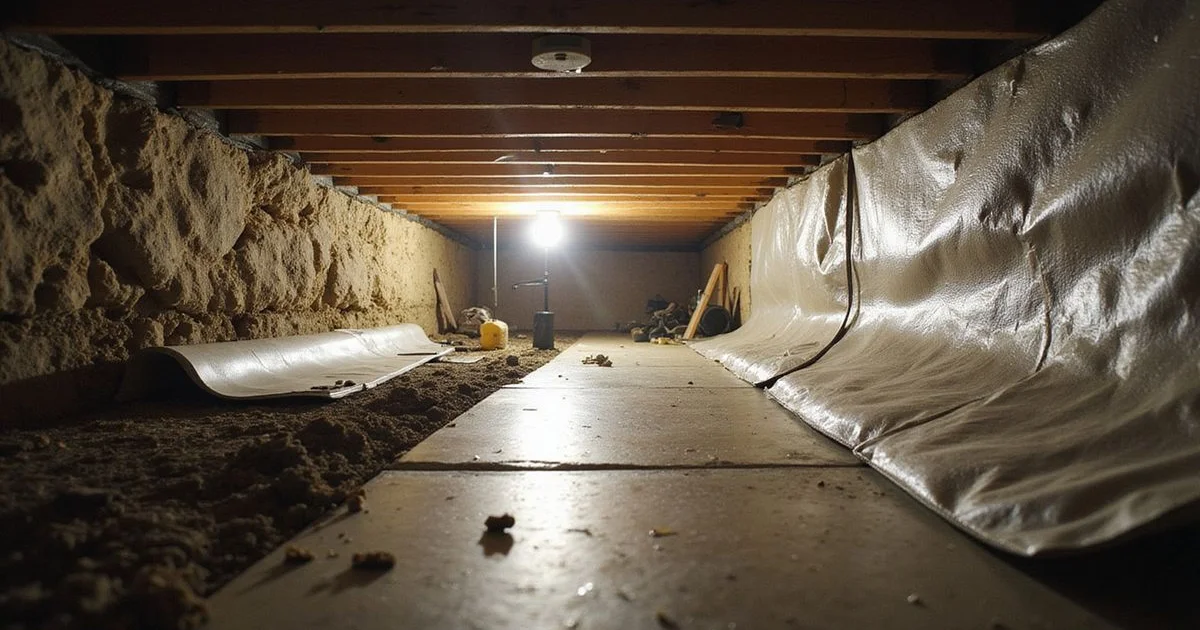
Full Encapsulation
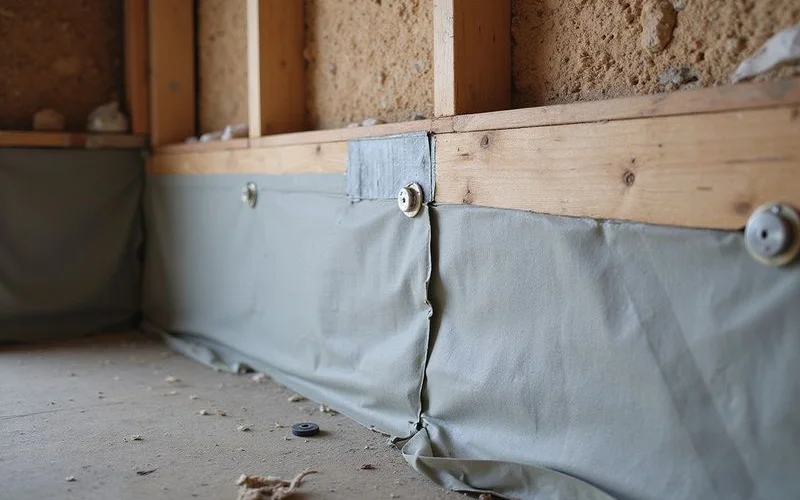
The liner extends up the foundation walls, wraps piers, and terminates near the top of the wall with mechanically fastened, sealed terminations. Penetrations for pipes and ducts are detailed. The result is a continuous enclosure rather than a sheet lying on the dirt.
What it addresses. Ground vapour, plus moisture migrating through foundation walls, plus a substantially reduced exchange of humid outside air. It also creates a space where humidity management is practical, because a dehumidifier in a sealed enclosure is working on a defined volume.
What it does not address. Still bulk water. That has to be handled first, every time.
Details are the system. Seams, wall terminations, pier wraps, and penetrations are where encapsulation succeeds or fails. A liner with unsealed seams and a loose wall termination is a ground retarder with extra material.
Comparing Them
| Ground vapour retarder | Full encapsulation | |
|---|---|---|
| Coverage | Soil only | Soil, walls, piers, penetrations |
| Terminations | Loose or lightly secured | Mechanically fastened and sealed |
| Ground vapour | Addressed | Addressed |
| Wall moisture | Not addressed | Substantially reduced |
| Air exchange | Unchanged | Substantially reduced |
| Humidity management | Difficult | Practical |
| Space usable for storage | Limited | Yes |
| Relative cost | Lower | Higher |
| Bulk water | Does not address | Does not address |
Which One Your Crawl Space Needs
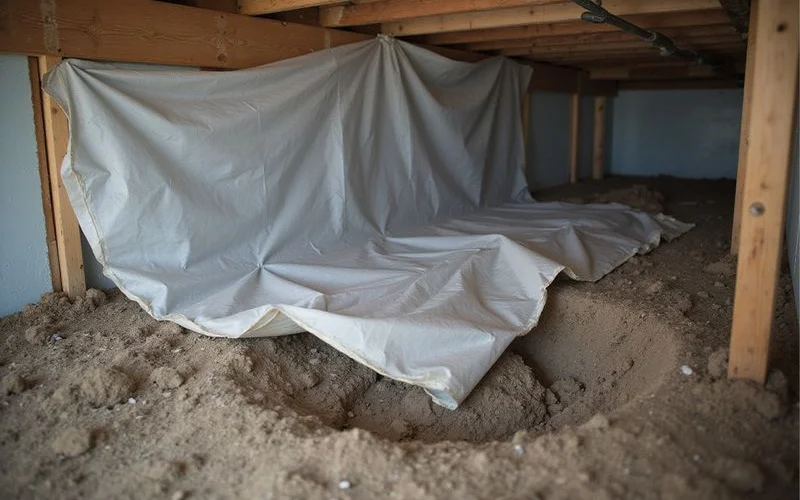
A ground retarder is often enough when bulk water has been corrected, the foundation walls are dry, measured humidity is close to acceptable already, and the space is not used for anything.
Encapsulation earns its cost when wall moisture contributes, when measured humidity stays high after ground vapour is addressed, when you want the space usable for storage, when ducts run through it, or when humidity management is the objective.
The deciding evidence is measurement. We take relative humidity readings during the evaluation and examine whether the walls are contributing. That is a more useful basis than a preference for the larger or the smaller package.
The Distinction That Matters Most
A vapour barrier addresses a different pathway than a footing drain.
This is the sentence worth remembering from this guide.
Moisture vapour from soil and liquid water from outside are different problems. Neither a retarder nor full encapsulation stops bulk water. Installing either over ground that is actively taking on water produces a clean-looking crawl space with water underneath it.
Drainage first. Then the liner.
Sequence and Ventilation
The order is: correct bulk water, repair any structural damage the moisture already caused, install the liner system, then measure and add humidity management if readings warrant it.
Encapsulation typically involves sealing vents, which converts the crawl space from a vented to a conditioned-in-character space. That has implications for the air in it, for any combustion appliances present, and for how the floor assembly behaves. It is a design decision made deliberately, with the reasoning stated, rather than a side effect of installing a liner.
Maintenance
Neither is maintenance-free. Seams and terminations should be inspected periodically. The main threat is other trades: a plumber, HVAC technician, or cable installer working in the crawl space can cut or displace a liner without mentioning it.
Where a dehumidifier is installed, the condensate route needs checking. And exterior drainage still needs to function, because a liner protects against vapour rather than against a failed downspout.