
Two Positions in the Same Strategy
Footing drains and interceptor drains are frequently discussed as alternatives. They are better understood as different positions along the path water takes to reach your foundation.
One works at the building. The other works upstream of it. On many Seattle properties both are appropriate, and on sloped lots the upstream one often does more per dollar. Our foundation drainage assessments map where water is arriving from before deciding where to put anything.
The Footing Drain
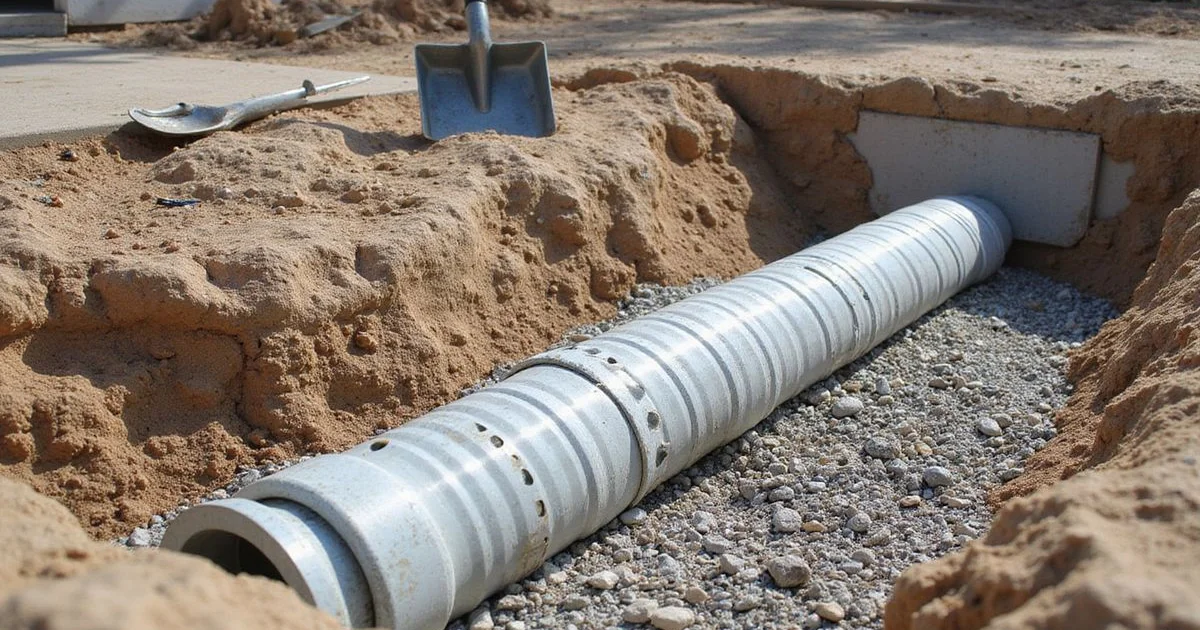
A perforated pipe bedded in washed aggregate, running alongside the footing at the base of the foundation wall, wrapped in geotextile fabric, and falling consistently toward an outlet.
What it does. Collects water that has reached the building envelope and routes it away before it can build hydrostatic pressure against the wall or find its way through the cold joint.
Where it belongs. On any excavated waterproofing scope, and as replacement where an existing drain has failed.
Its limitation. It is the last line of defence. Water arriving in large volume from uphill still arrives; the footing drain simply deals with it at the wall.
The Interceptor Drain
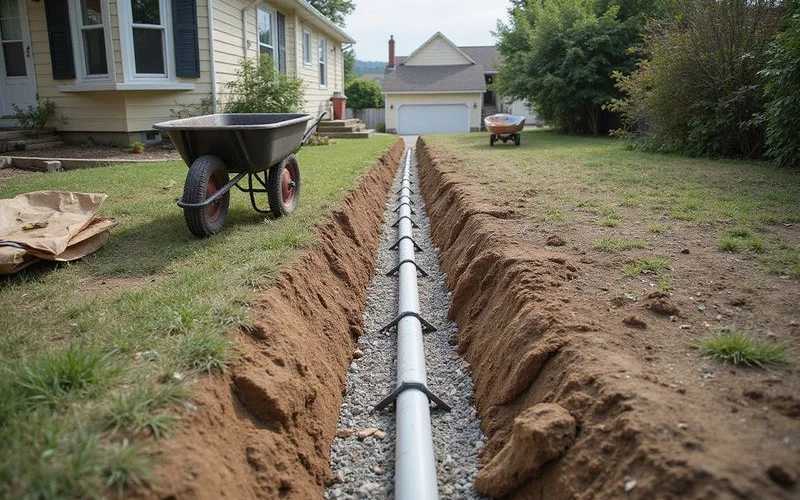
Also called a curtain drain. A trench cutting across the slope uphill of the structure, intercepting subsurface and surface water as it moves downhill and diverting it around the building.
What it does. Reduces the volume of water that ever reaches the foundation.
Where it belongs. Sloped lots where a meaningful part of the water is arriving from above, which describes a great deal of West Seattle, Queen Anne, Magnolia, Edmonds, Issaquah, and the hillside areas generally.
Its limitation. It requires space uphill of the building to install, and it does nothing about water arriving from the roof or from a rising water table beneath.
Choosing Between Them
| Site condition | Points toward |
|---|---|
| Sloped lot, water arriving from uphill | Interceptor drain, possibly with a footing drain |
| Flat lot, water table rising seasonally | Footing drain plus interior collection |
| Existing footing drain silted or crushed | Footing drain replacement or restoration |
| Excavation already open for waterproofing | Footing drain, as part of that scope |
| No space uphill to install | Footing drain by default |
| Roof water is the dominant source | Downspout tightlines before either drain |
That last row is worth dwelling on. A significant proportion of foundation water problems in Seattle are roof water problems. Before proposing either drain, we check where the downspouts actually discharge, because rerouting them costs a fraction of an excavated system and frequently resolves most of the issue.
Detailing Determines Lifespan
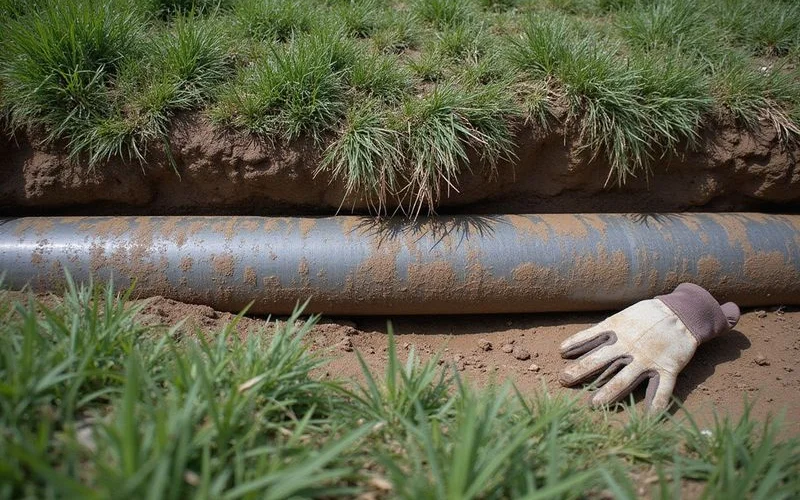
The single most common reason an old drain no longer works
No geotextile fabric around the aggregate envelope.
Over years, fine soil particles migrate into the gravel and then into the pipe, and the system silts shut. It happens gradually and invisibly, and by the time a basement gets wet, the drain has been functionally dead for a while.
Filter fabric is one of the cheapest items on the material list. Omitting it is one of the most expensive decisions on the job.
Other details that matter: washed aggregate rather than material with fines already in it, correct perforation orientation, consistent fall toward the outlet, and cleanouts where the run is long enough to warrant them.
The Discharge Is Half the Design
Neither drain accomplishes anything without somewhere for the water to go.
Gravity outlet. Daylighting at a lower point on the property. Simplest, cheapest, and it cannot fail during a power cut. Requires sufficient fall, which many sloped Seattle lots have.
Tightline to an approved discharge point. Where a gravity outlet is not available on the property.
Pumped system. Where neither works, a basin and pump. See sump pump systems.
What none of these should be is a discharge that ends a few feet from the foundation. Water discharged there soaks back through the soil and returns to the drain, and the system runs in a loop.
Restoring Versus Replacing
An existing footing drain that has silted may be restorable, cleaning out a blocked outlet, jetting a partially silted line, or replacing a crushed section, rather than requiring a full replacement.
That assessment is worth doing before anyone quotes excavation around the whole building. It does not always succeed, and where the drain was installed without fabric it usually only buys time, but it can be a legitimate interim step.
Keeping the system working afterwards is mostly seasonal attention, and our foundation and drainage maintenance guide covers what to check and when.