
Walls Give Warning
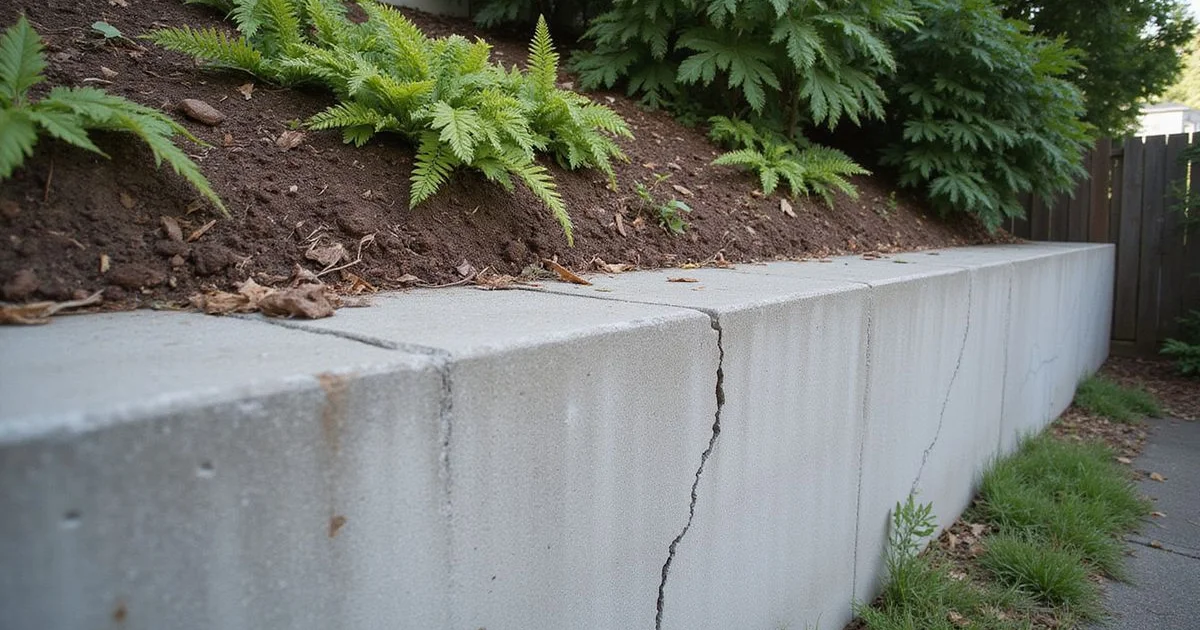
Retaining walls rarely fail without notice. They lean, bulge, crack, and shift over a period during which the problem is visible to anyone who knows what to look at.
That is useful, because early attention is far cheaper than late attention. A wall whose drainage is restored while it is still essentially plumb is a modest job. The same wall three winters later, leaning appreciably with courses displaced, is a different project entirely.
Our retaining wall repair assessments start by measuring what has moved and identifying why. Waterfront structures follow different rules, covered in our guide on seawall and bulkhead stabilisation.
The Signs
Leaning. The whole wall rotating outward about its base. Sight along the face from one end, or hold a level against it. A wall that was plumb and is no longer is telling you the loads have exceeded what it resists.
Bulging. Outward deflection concentrated in the middle rather than uniform rotation. Common in block and masonry walls, where individual courses displace.
Course displacement. In a block wall, individual units sitting proud of those around them.
Cracking. Vertical cracks where a wall is separating into sections, horizontal cracks where it is bending, and stepped cracking through mortar joints.
Separation at the ends. The wall pulling away from returns, steps, or adjoining structures.
Soil movement behind. The ground behind the wall dropping, which suggests material is migrating through or under it.
What Drainage Tells You
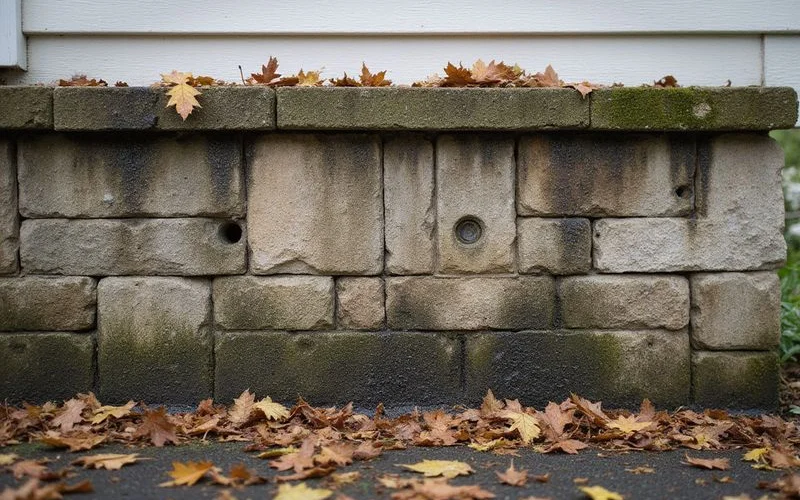
Look at the face during and after rain.
Weep holes. Are they there, and are they discharging? Weep holes let water that has collected behind a wall pass through it rather than accumulating. They block routinely, soil, roots, landscape fabric installed later. A wall with weep holes that produce nothing during sustained rain is a wall holding water.
Staining and efflorescence. Indicate water is moving through the wall, which tells you about the pressure behind it even where you never see it running.
Saturated soil behind. Ground behind a wall that stays wet long after rain, or that is visibly wetter than the surrounding area.
Drainage behind a wall is the single most common factor in residential retaining wall failure in this region. See foundation drainage for how it is corrected.
Surcharge
A wall designed for the soil behind it can be overwhelmed by something added later.
A driveway extended to the top of the wall. A vehicle habitually parked near the edge. A shed, deck footing, or addition built within the zone that loads the wall. Fill added over the years raising the retained height.
Surcharge changes both the diagnosis and the repair. A wall failing under a load it was never designed for may need a different answer than a wall failing because its drainage stopped working.
Measuring It
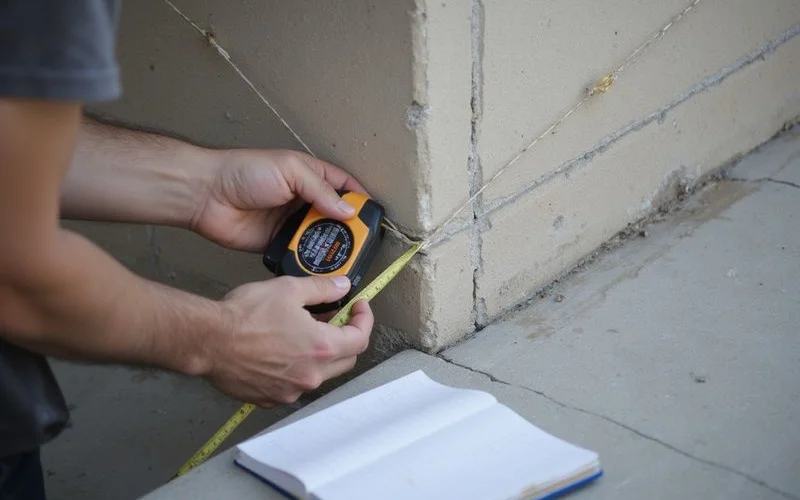
Record it yourself, with dates
Photograph the wall from a fixed position, mark the spot so you can repeat the shot from the same place.
Hold a level against the face and note how far out of plumb it reads, at several points along the wall.
Note the condition of the weep holes and whether they discharge during rain.
Repeat in six months. Two dated records tell you whether the wall is moving now, which is the question that matters.
When It Is Beyond the Wall
This is the distinction that changes everything about the response.
A wall failing on its own is a defined, repairable problem. A wall being displaced because the ground it sits in is moving is a slope-stability question, and repairing the wall would accomplish nothing.
Signs pointing beyond the wall: cracked or displaced hardscape well away from it, fence posts and trees leaning consistently in one direction, ground fissures on the slope, and movement in nearby structures. Where we see that pattern, it goes to a geotechnical engineer rather than into a repair quote.
When to Get It Looked At
Promptly when movement is progressing, the lean has increased, courses have displaced further, or a crack has extended since your own dated photograph. Promptly also when a wall retains height above an area people use, or where its failure would affect a neighbouring property.
Less urgently when a wall shows historic movement with no evidence of progression. Record the baseline, check the weep holes, watch through a wet season, and decide on evidence rather than on a first impression.
What should not happen is a decision driven by alarm. Retaining walls do fail, and it is worth acting on genuine movement, but most leaning walls in Seattle gardens have been leaning for years, and measurement rather than urgency is the right first response.