
A Different Environment
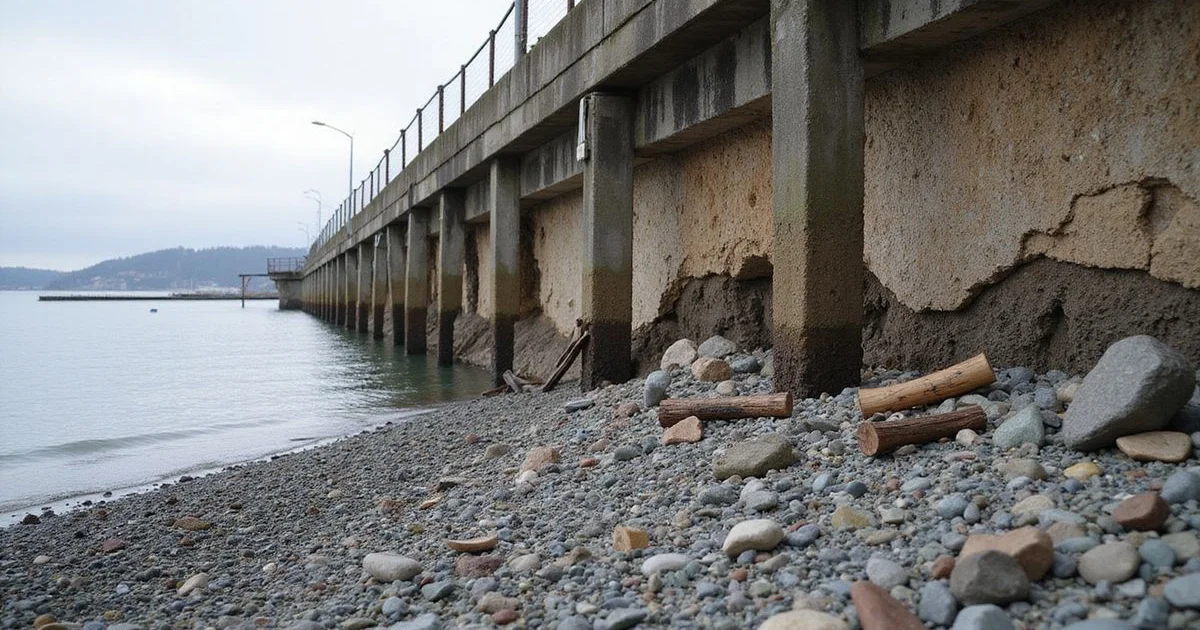
A waterfront bulkhead or seawall is a retaining structure, but the conditions it works in are unlike anything inland.
Water level changes twice daily. Wave energy acts on the face. The backfill behind it is subject to a hydraulic gradient that reverses with the tide. And the failure modes that result are specific enough that treating a bulkhead as an ordinary retaining wall leads to the wrong diagnosis.
This guide covers what those conditions do and what is involved in addressing them. It also covers where our scope ends, because on shoreline work that boundary matters more than usual. For inland structures, the observable symptoms are set out in our guide on retaining wall movement warning signs.
Why Bulkheads Fail
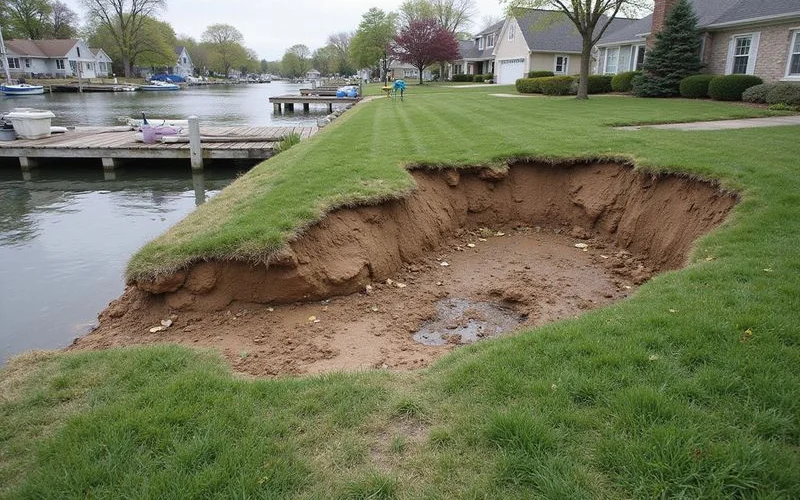
Tidal washing. Water moving in and out through joints, cracks, and around the ends of a structure carries fine material out of the backfill with it. This happens twice a day, for decades, and the cumulative effect is substantial.
Voids behind the wall. The direct result of washing. Material leaves, a void forms, and it is invisible from the landward side until the ground above it settles or collapses.
Toe scour. Wave and current action removing material at the base of the structure, undermining what it bears on.
Hydrostatic pressure. When the tide falls faster than water can drain out of the backfill, the wall experiences a pressure differential it may not have been designed for.
Age and material condition. Timber bulkheads deteriorate. Concrete spalls and reinforcement corrodes in a saline environment. Many Puget Sound bulkheads are decades old and built to the practice of their time.
Signs to Watch For
Settled ground, depressions, or sinkholes behind the wall, the clearest indicator of voids from washing. Leaning or bulging of the structure. Cracking, and in timber structures, deterioration at the waterline. Separation at the ends or at joints. Undermining visible at the base at low tide.
Settlement behind the wall is the one worth acting on soonest, because it means material is already leaving and the process is ongoing.
Approaches
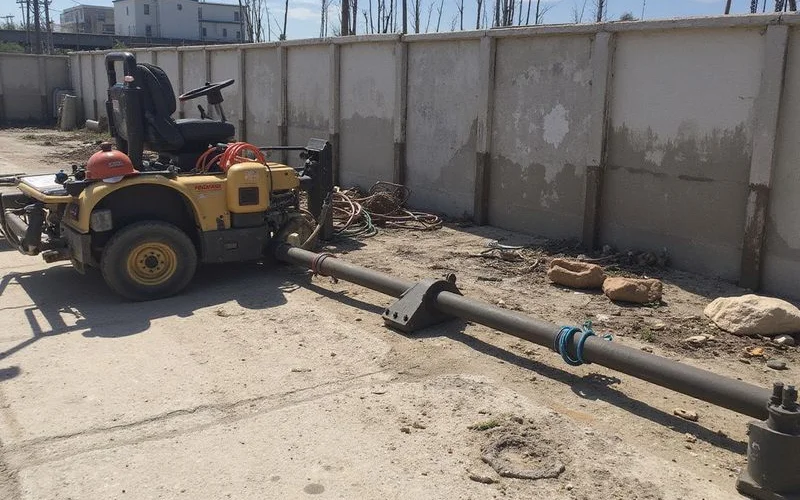
Helical tiebacks. Anchors installed through the wall into stable material landward, resisting the outward loads. Anchor count, depth, and spacing follow from design rather than convention.
Void filling and grouting. Filling voids behind and beneath the structure, which stabilises the backfill and can reduce further washing.
Toe protection. Addressing scour at the base where it is undermining what the structure bears on.
Drainage improvement. Reducing the hydrostatic differential that develops as the tide falls.
Most of these require engineered design on anything but the smallest structures. That is not us being cautious; it is what the loads and the environment call for.
Permitting Is Substantial
Shoreline work is not permitted like a garden wall.
Work near the shoreline commonly triggers review beyond a standard building permit, reflecting the environment the structure sits in. Multiple agencies may be involved, and requirements differ by jurisdiction along the Puget Sound shoreline.
The practical consequences are timeline and cost. Both should be identified before you commit, and a proposal that does not mention shoreline permitting has not accounted for a substantial part of the project.
Where Our Scope Ends
We take on shoreline stabilisation work only where it genuinely falls within what we offer. That is a narrower list than some contractors advertise, and it is deliberate.
Where a structure requires marine construction capability, where the engineering is beyond what we coordinate, or where the permitting complexity exceeds our experience, we say so and point you toward specialists who do this work routinely.
A failing bulkhead affects property that is expensive and difficult to restore. Taking on work that should have gone to a marine or geotechnical specialist is not a service to anyone, and a contractor willing to tell you that is worth more than one who says yes to everything.
Where to Start
An assessment that identifies the failure mode, washing, scour, hydrostatic loading, material deterioration, or a combination, and establishes whether the movement is progressing. A site evaluation with measurements gives you a documented baseline for the structure and for the ground behind it.
From there, whether the next step is within our scope or belongs with a shoreline specialist becomes a clear question with a clear answer.