
Three Different Professionals, Three Different Questions
Homeowners frequently ask whether they need an engineer, and the honest answer requires knowing which question you are trying to answer.
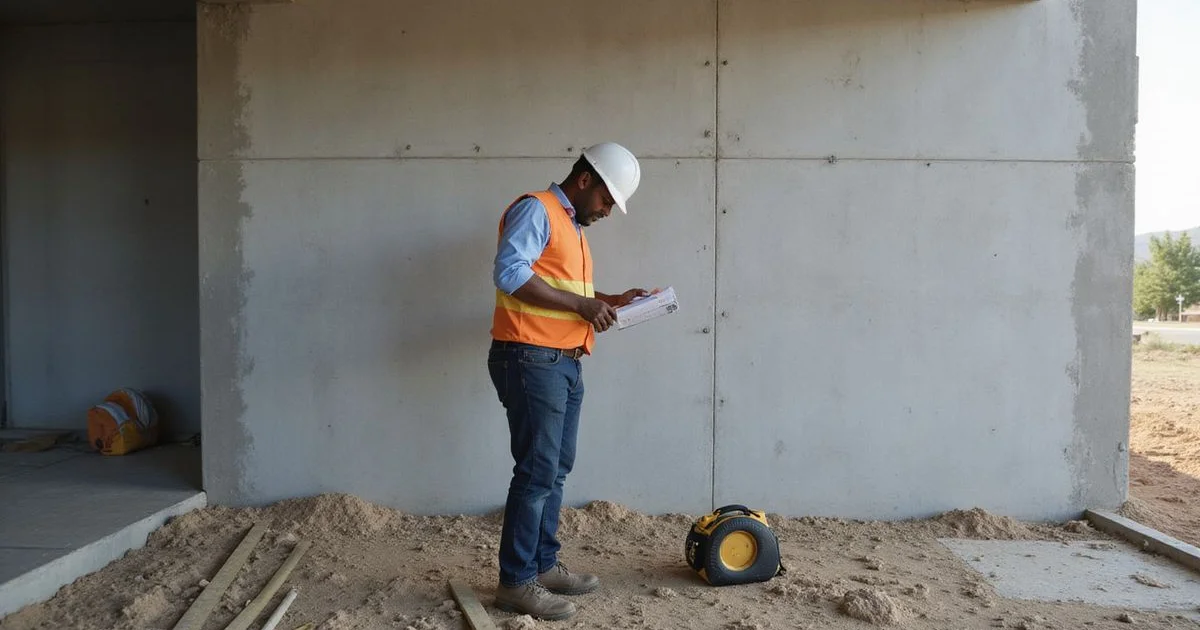
A foundation contractor, us, assesses what the building is doing. Observations, measurements, crack mapping, elevation survey, substructure condition, and site drainage behaviour. That answers: is something moving, where, how much, and what repair category applies. Our foundation evaluation page covers what that visit involves.
A structural engineer assesses the building’s structural adequacy and designs solutions. That answers: is this member or connection adequate, and what design will address it.
A geotechnical engineer assesses the ground. That answers: what is beneath this site, how does it behave under load, and is this slope stable.
Most concerns are answered by the first. Some require the second. A minority require the third.
What a Structural Engineer Examines
The building as a load-carrying system: how loads travel from roof to ground, whether members and connections are adequate, the effects of any modifications, and what design is needed for a repair or strengthening scheme.
When you need one: where a repair requires engineered design rather than a standard approach; where a prescriptive retrofit plan does not fit the building; where unreinforced masonry is involved; where structural modifications are planned; and where a jurisdiction requires stamped drawings for the permit.
The output is typically a report with findings, and where design is involved, stamped drawings that a contractor builds to.
What a Geotechnical Engineer Examines
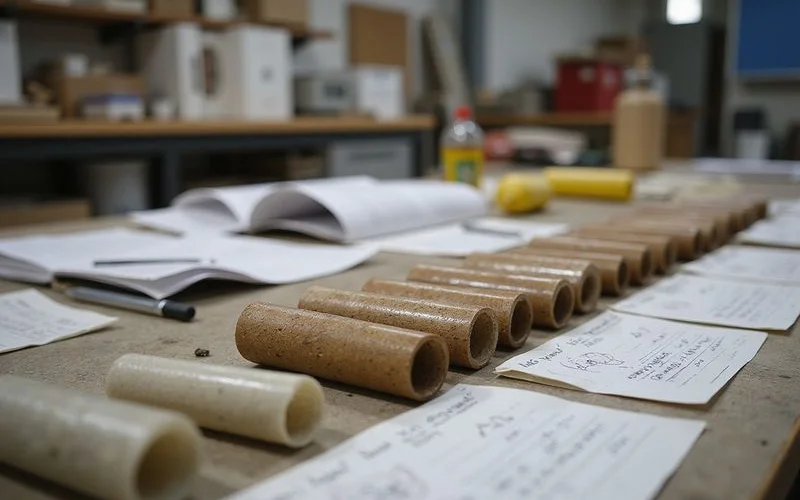
The ground: subsurface conditions established through borings or test pits, soil properties determined by testing, groundwater conditions, bearing capacity, settlement potential, and slope stability.
When you need one: where slope stability is genuinely in question; where a jurisdiction requires a geotechnical report for a critical-area permit; where subsurface conditions need to be known rather than inferred; and where a foundation design requires bearing capacity established rather than assumed.
The output is a report describing what is beneath the site and what that means for design.
Where the Boundaries Sit
| Question | Who answers it |
|---|---|
| Is my floor out of level, and by how much? | Foundation contractor, with an elevation survey |
| Is this crack cosmetic or structural? | Foundation contractor, with measurement and crack mapping |
| Which repair category does this call for? | Foundation contractor |
| Is this beam adequate for this span? | Structural engineer |
| What design will strengthen this connection? | Structural engineer |
| Does this building qualify for a prescriptive retrofit? | Contractor assesses; engineer designs if it does not |
| What soil is at footing depth? | Geotechnical engineer |
| Is this hillside moving? | Geotechnical engineer |
| How deep is competent bearing material? | Geotechnical engineer (or determined in the field during installation) |
Why Contractors Should Say “Not Me”

Two questions we decline to answer:
“Is my slope stable?”. That requires subsurface investigation and geotechnical analysis. A contractor’s opinion is not a substitute, and a confident answer from one is a warning sign rather than reassurance.
“What is under my footings?”, We can describe what is likely, based on regional geology and how the building is behaving. We cannot tell you what is there. Anyone who does, without having investigated, is telling you a regional story with your address in it.
Scope discipline is not modesty. Slope stability questions answered wrongly have serious consequences, and confidently giving an answer outside your competence is how homeowners end up with an expensive pier installation on a property whose actual problem was slope movement.
The Usual Sequence
Start with a foundation evaluation. It costs least, it establishes what the building is actually doing with measurements rather than impressions, and it determines whether engineering is warranted.
From that, one of four outcomes: nothing needs doing; monitor and re-measure; repair with a defined scope; or refer to the appropriate engineer.
Going straight to an engineer is occasionally right, if a jurisdiction requires a report, or if you already know slope stability is the question. More often it means paying for a detailed answer to a question that has not yet been framed properly.
What You Should Get Either Way
A clear statement of what was examined, what was found, what the findings do and do not indicate, what was not accessible, and what a reasonable next step is.
Any assessment that reports on areas nobody reached, or that presents inference as observation, is worth less than one that says plainly what it could not see.