Seasonal
Before the 2026 Rains: A Fall Drainage Check for Seattle Homes
As Puget Sound's wet season returns, a short seasonal walkthrough of gutters, downspout discharge, and grading that helps keep water away from your foundation.
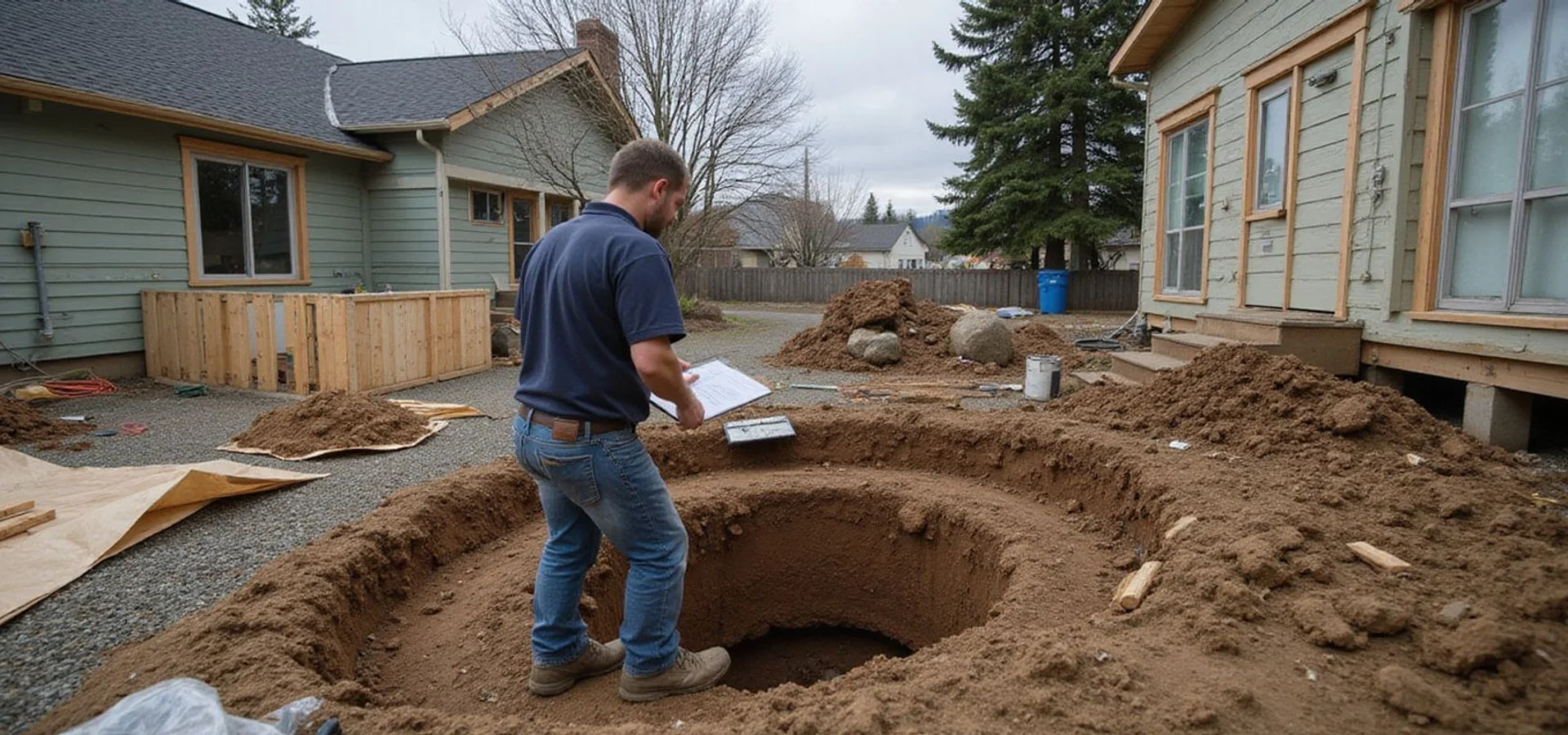
The Puget Sound wet season does not announce itself with a storm. It arrives as a grey week in October that turns into a grey month, and the damage it does to foundations is cumulative rather than dramatic.
That is worth understanding, because it changes what maintenance is for. We are not preparing for a single extreme event. We are preparing for six months of sustained rainfall that will raise the water table, saturate the soil profile, and find every path that was not planned for. A gutter that overflows slightly in a downpour is a minor nuisance. The same gutter overflowing for twenty weeks delivers a remarkable quantity of water into the ground beside your foundation.
Here is the walkthrough worth doing before the rain settles in. None of it requires a contractor, and most of the value is in the first two items. Where a walkthrough does turn up something structural, that is the point at which foundation repair in Seattle becomes a conversation worth having rather than a guess.
1. Clear the Gutters, Then Watch Them Work
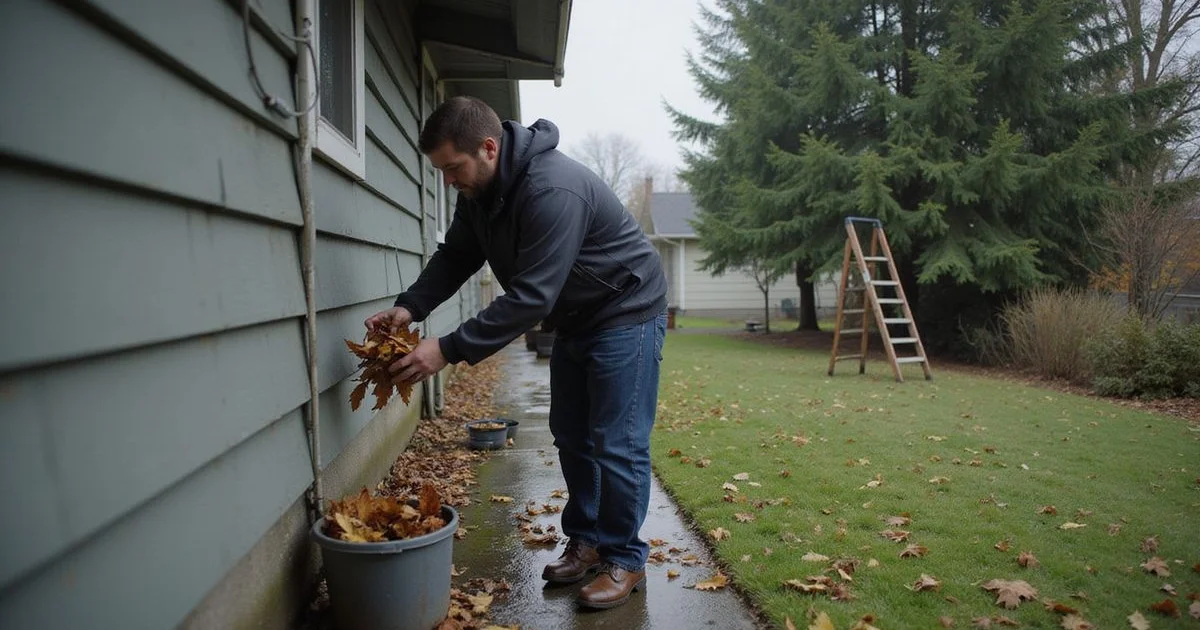
Clearing gutters is the obvious part. The part people skip is watching them during actual rain.
A gutter can be perfectly clear and still fail. A section with inadequate fall pools water and overflows at the low point. A joint that has opened drips continuously in one spot, and that one spot ends up soaking the same patch of soil all winter. A downspout that is clear at the top can be blocked at the elbow.
Go out during a genuine rain, not a drizzle, and look at each elevation. You want water arriving in the gutter, running to the outlet, and going down the downspout. Anywhere it is going over the edge instead, that is a location where the ground beside your foundation is getting significantly more water than it should.
2. Follow Every Downspout to Where It Actually Ends
This is the single highest-value item on the list and it is the one most commonly wrong.
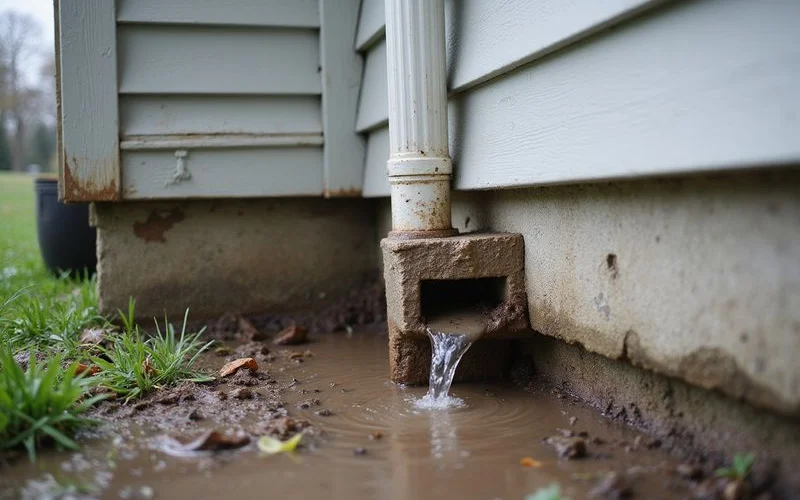
A roof sheds a lot of water. Every downspout concentrates a section of that roof into one point. If that point is at grade beside the wall, you are injecting the entire output of that roof section directly into the soil that presses against your foundation, repeatedly, for the whole season.
Walk each downspout to its end. You are looking for one of three situations. Good: it connects to a tightline that carries water well away from the building to a proper discharge. Acceptable: it discharges onto a splash block or extension that moves water several feet from the wall onto ground that falls away. A problem: it ends at grade beside the foundation, discharges into a planting bed against the house, or goes into a buried pipe that nobody has confirmed still works.
That third category is worth taking seriously. A buried downspout line that has collapsed or blocked is worse than no line at all, because the water is delivered below grade directly at the foundation while everything looks fine from above.
3. Check the Fall in the First Few Feet
Ground within roughly the first ten feet of a house should fall away from it. Over decades this reverses quietly, mulch gets topped up, beds get built out, backfill settles, a path gets added.
You do not need instruments. Stand at the wall and look. In several places, particularly on the elevations where you have noticed dampness, check whether the ground slopes toward the building. Look for the evidence too: a shallow depression along the wall, a line of moss or darker soil, splash marks up the siding, a persistently soggy patch that stays wet longer than the rest of the yard.
Correcting a reversed grade is inexpensive compared with almost anything else in this trade, and it prevents water pooling where it can do the most damage.
4. Find and Check the Drain Outlets
If your property has a footing drain, an interceptor drain, or a downspout tightline, that system has an outlet somewhere. Find it.
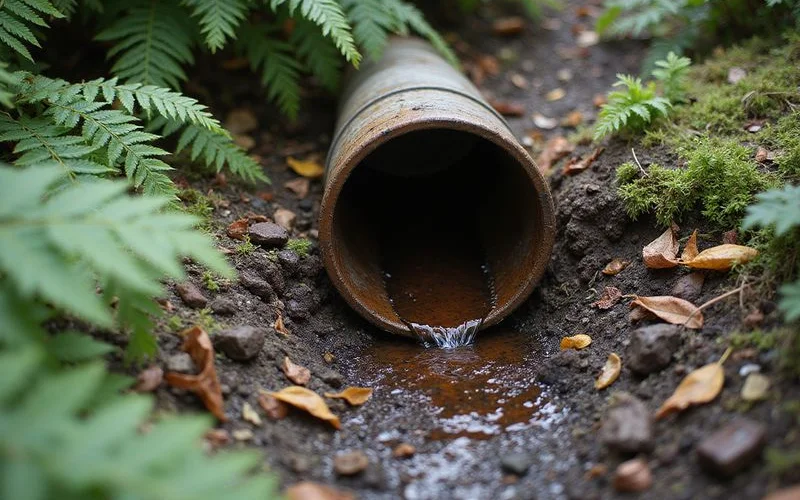
Daylight outlets block. Leaves pack into them, soil creeps over them, and rodents nest in them. An outlet that is 80 percent blocked looks fine from ten feet away and is functionally useless during the flow rates that matter.
During a decent rain, water should be visibly discharging from it. If your drain outlet is dry while it is raining steadily, either the system is not collecting or it is blocked, and both are worth knowing in October rather than in February.
5. Test the Sump Before You Need It
If you have a sump pump, test it now rather than discovering the answer during a storm.
Pour water into the basin until the float lifts. Confirm the pump starts, moves water, and shuts off cleanly. Then check three more things: that the basin has not silted up, that the discharge is actually reaching its outlet, and, if you have battery backup, that the battery still holds a charge.
A pump that sat idle through a dry summer is exactly the kind of thing that fails on first demand. Ten minutes in September is worth considerably more than the same ten minutes in January.
6. Look at the Crawl Space Before It Is Wet
Get into the crawl space while it is dry and note what normal looks like. Is the ground vapour barrier intact, or has it been torn and shoved aside by whoever last ran ductwork? Is there standing water, or staining showing where water has been? Does the wood look dry?
Knowing the dry-season baseline makes a midwinter comparison meaningful. Without it, you are looking at a damp crawl space in January with no idea whether that is new.
7. Note What Changes, With Dates
The most useful thing a homeowner can do costs nothing: write down what you observe, and date it.
Photograph cracks with something for scale beside them. Note which doors bind and when. Record where water appears, on which elevation, and after how much rain. Keep it in one place.
Dated observations are the difference between telling us “there’s a crack” and telling us “this crack was this wide in March, and it looks wider now.” One of those is a description. The other is evidence, and it changes what an evaluation can conclude.
| Check | When | What you are looking for |
|---|---|---|
| Gutters and joints | Before the rains, and during real rain | Overflow points, drips, blocked elbows |
| Downspout discharge | Before the rains | Anything ending at grade near the wall |
| Grading, first ten feet | Any dry day | Ground falling toward the house, standing damp |
| Drain outlets | During steady rain | Water actually discharging |
| Sump pump | September or October | Starts, moves water, shuts off cleanly |
| Crawl space | While dry | Baseline condition, intact vapour barrier |
When to Stop and Call Someone
Most of the above is homeowner maintenance. A few findings are worth a conversation.
Water entering a basement where it did not before. A crawl space with standing water rather than dampness. A retaining wall that has visibly moved since last year. A crack that is measurably wider than your own dated photograph from the spring. A floor that has started to feel different underfoot.
None of those are emergencies in themselves, and none of them require a decision this week. They are reasons to get an evaluation with actual measurements rather than watching and wondering through another winter.
If a structure is actively moving or a slope is visibly failing, that is different, move away from the affected area and contact emergency services rather than a contractor.
Our foundation drainage page covers the systems involved when maintenance is not enough, and the drainage maintenance guide goes into more detail on the seasonal routine.
Found something on your walkthrough that concerns you?, Request a foundation repair quote
Related service
Foundation Drainage
Surface and subsurface water management, including footing and interceptor drains.
See Drainage
About the author
Dane Calloway
Foundation Repair Content Editor
Dane Calloway is an editorial pen name used by Seattle Foundation Repair to publish calm, technically careful guidance for Puget Sound homeowners. Technical reviewers and project contributors are credited separately.
Note: Editorial pen name of Seattle Foundation Repair. Content reviewed against primary engineering and municipal sources.
Read our editorial standards