
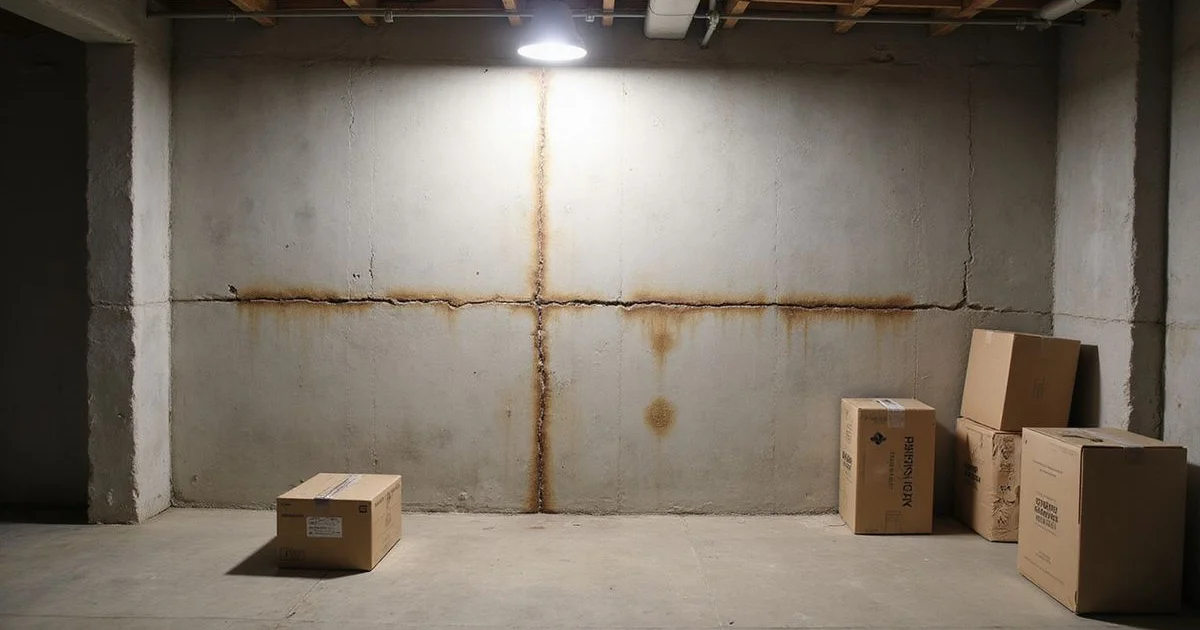
A Crack Is Evidence, Not a Verdict
We know how unsettling it is to find a fresh fissure in your foundation, especially when the internet happily supplies a confident worst-case interpretation within seconds. Finding basement wall cracks simply means the concrete has relieved physical stress, but it does not automatically equal structural failure.
A recent 2026 survey revealed that foundation repair demand has surged over 20% as the US housing stock ages, making this a highly common challenge.
Most online interpretations are oversimplifications, and the rule that gap width alone indicates severity is the least reliable of all. What a structural flaw actually tells you depends heavily on its orientation, its specific location, whether it is actively moving, and what else is happening in the wall.
Our professional basement wall repair assessments evaluate all four of these critical factors. The evaluation starts by taking precise measurements rather than jumping to categorize the damage.
Unrepaired foundation issues can reduce a property’s value by up to 25%, so getting accurate data is essential. Let’s break down the distinct patterns you might see and walk through the exact steps needed to protect your investment.
The Four Patterns
Basement wall cracks generally fall into four distinct categories: vertical, horizontal, stair-step, and diagonal from a corner. Each pattern corresponds directly to a specific structural force acting on your building.
Vertical Cracks
Vertical fissures running straight up and down are frequently shrinkage-related. Concrete shrinks as it cures, and a newly poured wall section relieves that stress somewhere. They are extremely common, often appear near the middle of a wall section or beside an opening, and are usually not structural.
We typically see these hairline gaps measuring less than 1/16 of an inch wide in the US market. They can carry groundwater into your property, which is a serviceability problem rather than a stability one. Minor shrinkage flaws are cosmetic byproducts of normal concrete curing.
Horizontal Cracks
A horizontal crack basement wall defect indicates that the structure is bending inward under severe lateral pressure. Particularly in the middle third of the wall height, this pattern strongly suggests a critical load the wall is struggling to resist.
Expansive clay soils absorb moisture and expand with immense force, sometimes generating lateral pressures exceeding 5,000 pounds per square foot against your foundation. This is the pattern most associated with the immediate need for heavy reinforcement. Hydrostatic pressure from poor drainage is a primary culprit for this severe damage.
Stair-step Cracks
Movement in block or masonry walls travels along the weakest path, which is the mortar joints, producing a stepped diagonal shape. A stair step crack block wall generally indicates differential movement.
Our field teams often trace this back to uneven soil settlement below the footing or displacement from a lateral load. Moisture changes in the ground cause one section of the structure to sink faster than the adjacent sections. The weight of the house then presses down unevenly on the compromised footing.
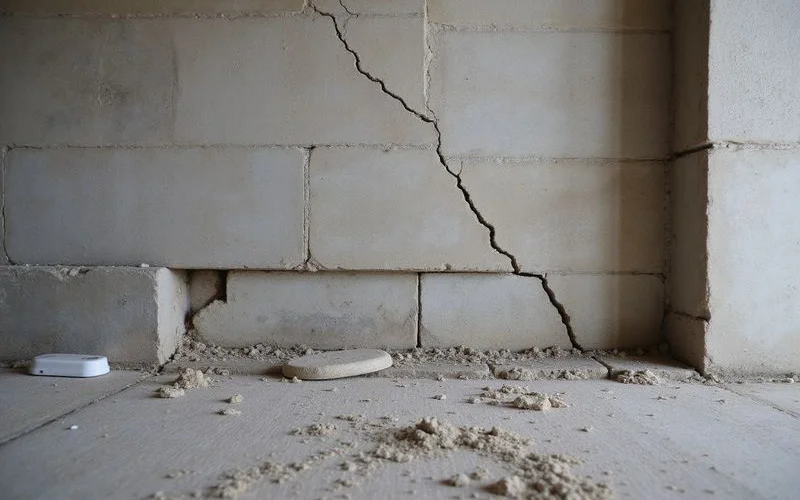
Diagonal Cracks from a Corner
Fissures running at roughly a 45-degree angle from stress concentration points are often associated with settlement of the footing beneath that specific corner. This points toward underpinning rather than simple wall reinforcement. Sinking foundations require deep stabilization to stop the downward movement completely.
Why Width Is Not the Answer
Relying solely on how wide a gap appears is a flawed diagnostic method because it only shows past movement, not current structural stability. The appeal of a crack-width rule is obvious: it gives a distinct number and a quick verdict. It also fails constantly in real-world applications.
According to the American Concrete Institute (ACI), acceptable crack widths for reinforced concrete under service loads are tiny, often ranging from 0.004 to 0.016 inches. The general engineering consensus provides specific benchmarks for visual evaluation:
- Hairline (under 1/16 inch): Typically cosmetic shrinkage that warrants standard monitoring.
- Moderate (1/16 to 1/8 inch): Requires close observation and potential water sealing.
- Severe (over 1/8 inch or 3 millimeters): Warrants an immediate professional structural inspection.
A hairline fracture that has opened over the past six months in a wall that is measurably deflecting is far more significant than a quarter-inch gap that stabilized in 1984 and has not changed since. Width tells you about the total historical movement that has occurred at some specific point.
We always prioritize checking for displacement over simple width. Running a finger across the gap to feel for a “step” or uneven ledge reveals if the wall is moving out of plane. Whether the damage is actively shifting carries more weight than any static measurement.
Measuring Deflection
The measurement that truly matters for a basement wall is how far it has moved inward from its original vertical position, not how wide the surface gap is. Even a 1/4 inch of visible bowing in a standard block wall serves as a definitive structural finding.
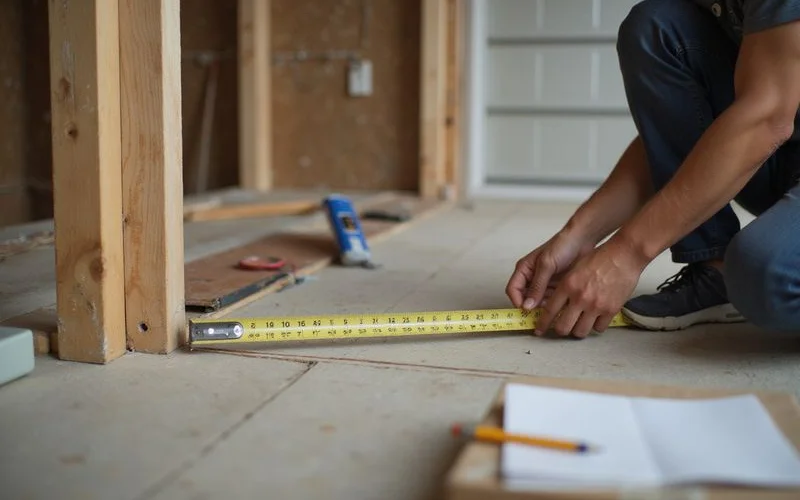
A string line stretched tightly from the top of the wall down to the bottom, with offsets recorded at regular intervals, gives an accurate profile. This reveals exactly how much deflection exists and where the maximum bend sits. That profile is far more diagnostic than any verbal crack description, and it becomes a permanent baseline for future comparison.
Our assessment process relies heavily on this baseline data. A repeat measurement after a heavy wet season answers the fundamental question that nothing else can: is this wall moving right now? The data provides a clear path forward for structural repairs.
What to record yourself
Photograph each crack with a coin or ruler beside it for scale. Mark each end with a light pencil line and date it, so any extension is visible later.
Note whether the crack passes water, and in what conditions. Note any efflorescence, the white powdery deposit that shows water has moved through the concrete.
Repeat in three to six months. Two dated records are worth more than any single expert opinion formed in twenty minutes.
Using the “coin test” is a practical way to gauge width at home while you monitor for deflection. A credit card edge fits into a 1/30 inch gap, while a dime fits exactly into a 1/16 inch space. This gives you an objective reference point for your dated photographic records.
Other Signs Worth Noting
Fissures rarely occur in complete isolation, and looking for secondary symptoms throughout the property helps identify the exact failure mechanism. What else is happening in the immediate environment tells you the true story about the building’s structural health.
Efflorescence or damp staining along a crack means groundwater is actively moving through the concrete barrier. This white powdery deposit is primarily calcium carbonate left behind when the water evaporates. Displacement, where one side of a gap sits proud of the other side, indicates movement out of plane rather than a simple separation.
Our teams look closely at the upper levels of the property for confirming evidence. Secondary indicators often mirror the structural movement happening below ground:
- Doors and windows binding or sticking on the floor directly above.
- Drywall damage appearing at 45-degree angles above door frames.
- Cracks in the floor slab that line up perfectly with the wall cracks.
Cracks along the cold joint where the floor slab meets the foundation wall are usually a water pathway rather than a structural failure. The two surfaces were poured completely separately during construction and were never bonded together.
What Comes Next
The proper response to a foundation gap depends entirely on whether the wall is currently moving and deflecting inward. If the structure is strictly stable and the gap is dormant, the appropriate response may be simple epoxy sealing to stop water from passing through.
We often recommend just monitoring dormant flaws with dated records. Average national costs for simple epoxy or polyurethane crack injections range from $500 to $2,000 in 2026, making it an affordable serviceability fix. If the wall is actively deflecting, the question quickly becomes about structural reinforcement.
Reinforcement Options Compared
Choosing the right structural fix depends heavily on the degree of movement and your future finishing plans for the space. Different solutions provide varying levels of resistance against soil pressure.
| Repair Method | Best Use Case | Key Advantage |
|---|---|---|
| Carbon Fiber Straps | Minor to moderate bowing (under 2 inches) | Ten times stronger than steel, zero profile for finishing walls. |
| Steel I-Beam Bracing | Moderate to severe inward movement | Provides rigid, heavy-duty resistance against extreme soil pressure. |
| Wall Anchors | Severe deflection with accessible exterior yard space | Can actively pull the wall back toward its original vertical position over time. |
Our comprehensive guide on bowing basement walls covers that specific mechanism in detail. The resource on crack injection and wall reinforcement explains exactly what each distinct treatment actually does to stabilize the property.
Either way, the very first move is always accurate measurement rather than quick categorization.
Reading basement wall cracks correctly is useful, but measuring the wall over time is what permanently settles the debate. Contact a certified structural specialist to schedule a precise baseline measurement and protect your investment today.