
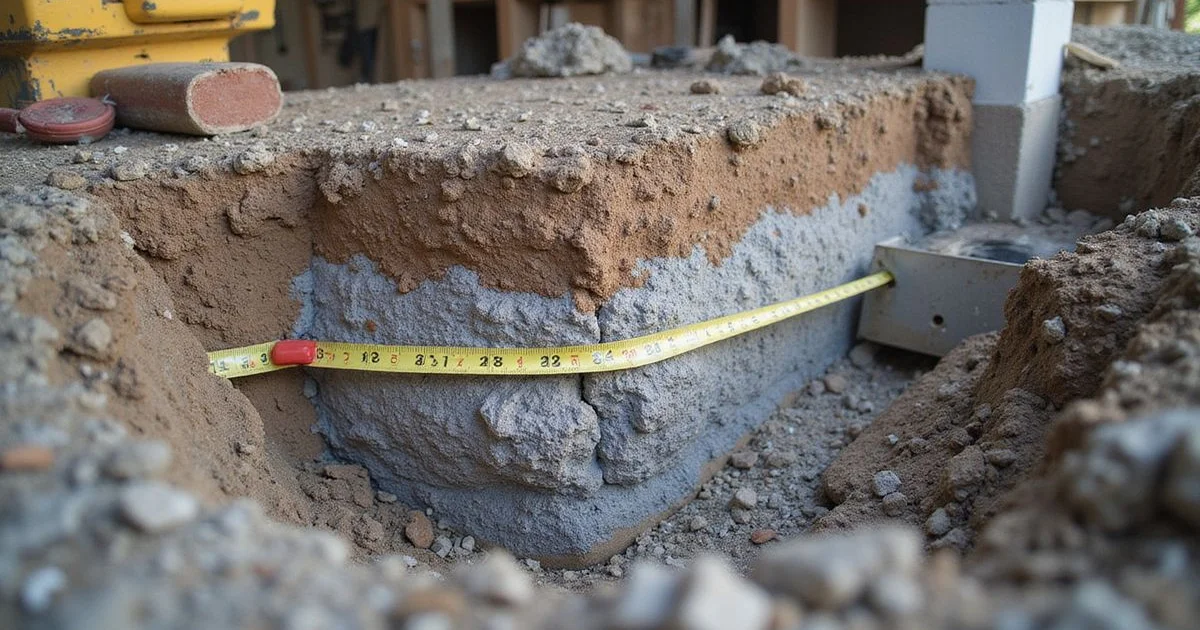
Settlement Is a Bearing Problem
A footing settles when the material beneath it cannot carry the load it is being asked to carry, or, more commonly, when it could carry that load initially and something changed.
The change is usually one of three things: the material consolidated under sustained load, water altered its behaviour, or the material was washed or eroded away. Understanding which applies is what determines whether underpinning is the right answer and how deep the supports need to go.
Around Puget Sound, four mechanisms account for most residential settlement we assess. What they look like from inside the house is set out in our guide on signs of foundation settlement.
Uncontrolled Fill
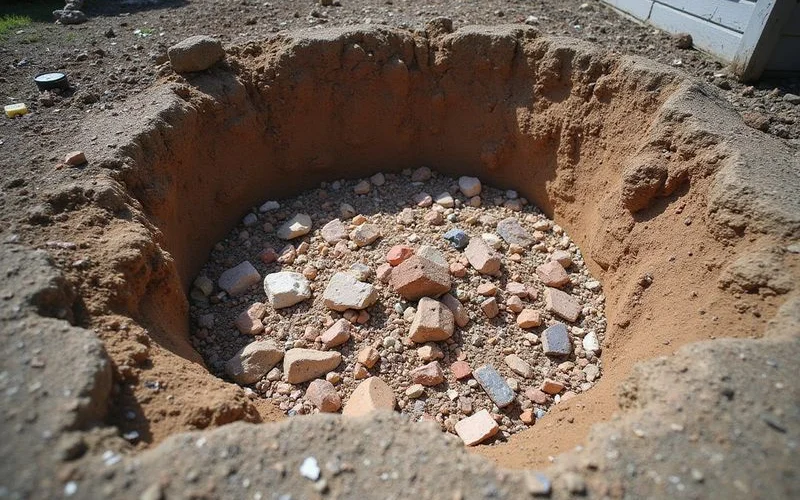
This is the most common driver in the city and it has nothing to do with glacial geology.
Seattle has moved an enormous quantity of earth over a century and a half, regrades, filled tideflats, ravines filled to create buildable ground, and countless individual lots levelled for building. Much of that material was placed without modern compaction standards, and a good deal of it was simply pushed downhill.
Uncontrolled fill consolidates under sustained load. It does so slowly and unevenly, which is exactly the recipe for differential settlement. A house whose footings bear partly on native ground and partly on fill will settle differentially almost by definition, because the two materials behave differently under the same load.
This mechanism is particularly common on hillside lots where a level building platform was created by cutting into the slope and placing the spoil on the downhill side.
Consolidation of Fine-Grained Soils
The regional glacial sequence includes fine-grained units, of which Lawton clay is the most frequently named locally.
Fine-grained soils consolidate when load is applied and pore water is gradually expelled. The process is slow, years rather than months, and it is influenced by moisture condition, which means a change in drainage can restart or accelerate consolidation in material that had been stable.
The important qualification is that clay is not uniformly problematic. Some fine-grained units perform perfectly well as bearing material in the right condition. Treating “clay” as a synonym for “unstable” is a simplification that leads to incorrect conclusions, and it is common in foundation marketing.
Organic Soils on the Eastside
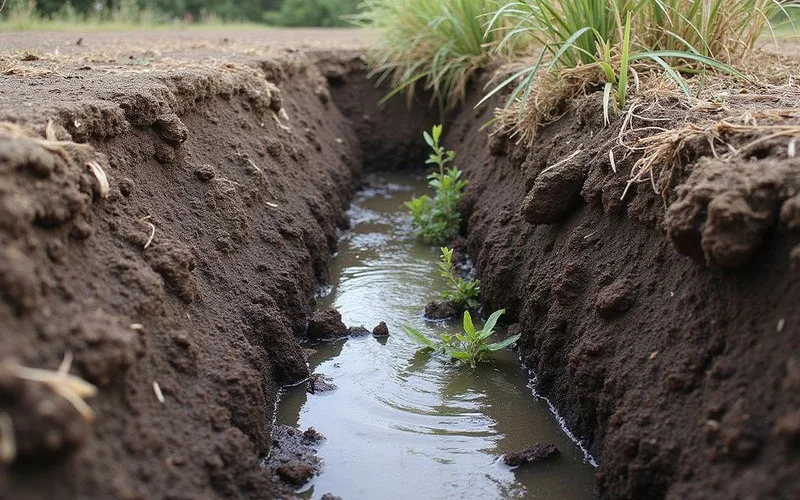
Around Mercer Slough and the low ground near Factoria, organic peat and silt are present in places.
Organic soils have a distinctive settlement behaviour: they compress substantially under load, and they continue compressing for a very long time. Secondary compression can run for decades after a building is constructed.
This produces a characteristic pattern in Bellevue-area enquiries. The symptom is not a crack that appeared last spring. It is a door that has been getting slightly harder to close every year for fifteen years, and an owner who finally decided to have it looked at. Documented elevation readings, taken and repeated, are especially valuable in this situation because they make a very slow process visible.
Erosion and Washout
Water moving through soil carries fines with it. Over years, a leaking supply line, a broken drain, or a downspout discharging at the same point can remove enough material to create a void or a zone of reduced support.
This mechanism is more common beneath flatwork than beneath footings, which is why concrete leveling so often traces back to a drainage fault. But it affects footings too, particularly where a persistent leak has been running unnoticed.
The defining characteristic is that it is ongoing until the water source is corrected. Underpinning into a continuing washout addresses the load but not the cause.
Water Is the Common Thread
| Mechanism | How water is involved |
|---|---|
| Uncontrolled fill | Saturation accelerates consolidation of loose material |
| Fine-grained consolidation | Moisture change alters behaviour and can restart consolidation |
| Organic soils | High water content is inherent; drainage changes affect the rate |
| Erosion and washout | Water is the direct agent removing material |
This is why drainage correction so frequently appears alongside structural repair in our proposals. It is not an upsell. Underpinning transfers the load; it does not stop water arriving, and leaving an active water source in place means treating the effect while the cause continues.
Why Neighbourhood Generalisations Fail
It is tempting to say “houses in this neighbourhood settle because of X.” It is also unreliable.
Two adjacent lots can differ substantially in how they were prepared, how much fill was placed, where the original grade sat, and whether a drainage system was installed and still functions. Bearing conditions vary with depth and over short horizontal distances.
This is why we measure the individual building, look at how water behaves on the individual site, and refer to a geotechnical engineer when the subsurface question genuinely needs answering. Anyone offering a confident account of what lies beneath your specific footings without having investigated is telling you a regional story with your address inserted.
For the broader geological picture across the region, our guide on Seattle ground, water, and foundations covers the sequence and the mapping in more detail.