
Two Symptoms That Get Over-Read
Sloping floors and sticking doors are the two observations most likely to send a homeowner searching for foundation companies at eleven at night. They are also the two most likely to have an explanation that is not structural.
That does not mean ignoring them. It means gathering the right information before concluding anything, and our crawl space repair evaluations start with exactly that.
Why Doors Stick
Humidity. Wood absorbs moisture and swells. In a climate with months of sustained damp, doors bind in winter and free up in summer, every year, in houses with nothing whatsoever wrong with them. This is the single most common explanation.
Hardware and hinges. Screws loosen, hinges sag, and a door drops slightly in its frame. Extremely common and fixed with a screwdriver.
Framing movement. Houses move. Framing shrinks as it dries, and in a newer house that process continues for years after construction.
Actual structural movement. Where a portion of the structure has dropped, door frames rack out of square.
The detail that separates them
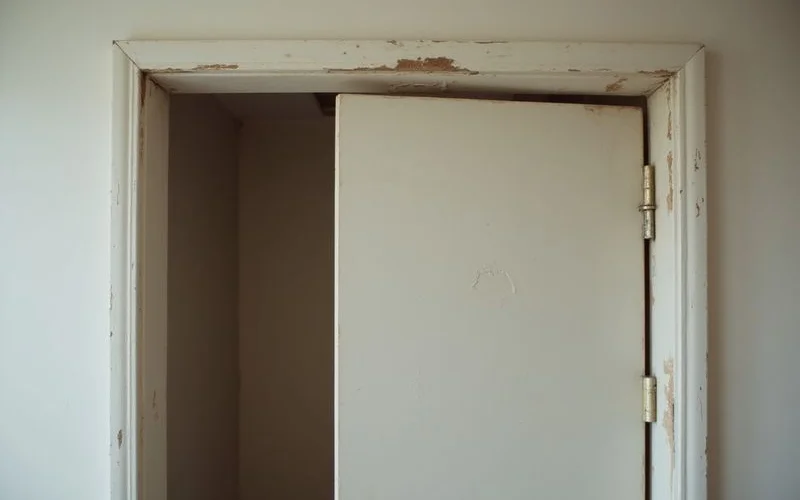
Look at the gap along the top of the door when it is closed. If it is even, the door is probably just swollen or the hinges have dropped.
If the gap is noticeably wider at one side than the other, the frame has gone out of square, which means something moved.
And ask yourself the timeline. Seasonal, coming and going with the weather? That is humidity. Progressively worse every year for five years? That is worth measuring.
Why Floors Slope
Crawl space framing. The most common cause in older Seattle homes. Interior posts settle into soft ground, a girder deflects across a span it was never comfortable with, or joists near the perimeter lose section to decay. The result is a floor that drops toward the interior of the plan.
Perimeter settlement. A footing has lost bearing, and the floor drops toward an exterior corner or along an exterior wall.
Original construction. Houses built a century ago were not built to modern flatness tolerances, and they were not expected to be. Some of the slope in an old house has been there since the day it was finished.
Subfloor and finish issues. Occasionally what feels like a sloping floor is a subfloor problem or an uneven finish layer rather than structural movement at all.
The direction of the slope is genuinely informative. Toward the middle of the plan points at the crawl space. Toward an exterior corner points at the perimeter. That is the first thing an elevation survey establishes.
What Measurement Adds
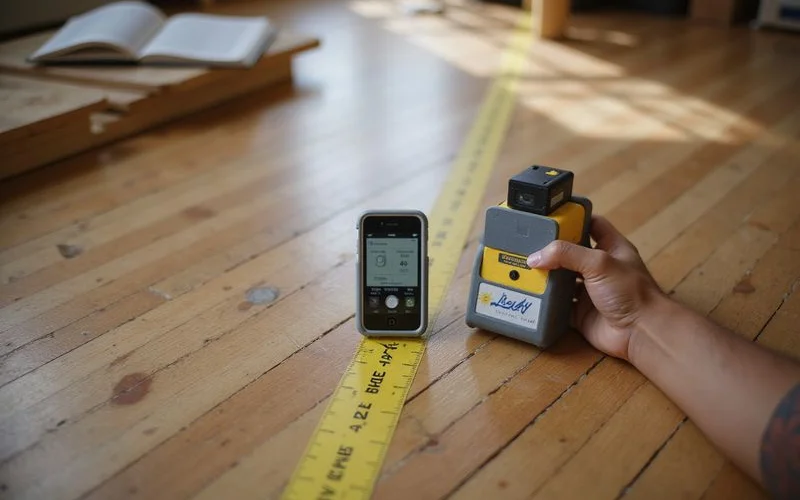
People are poor judges of floor level. Visual cues in a room, a sloping ceiling line, a wall that is not plumb, furniture that sits unevenly, mislead in both directions. Rooms that feel badly sloped measure nearly flat, and rooms that feel fine measure otherwise.
A multi-point laser manometer survey records elevations across the plan in hundredths of an inch. It gives you the magnitude, the shape, and the direction, and it gives you a dated baseline, so a repeat reading later can establish whether anything is actually moving.
That last point is the one that matters most in ambiguous cases, which these frequently are.
What to Do Before Calling Anyone
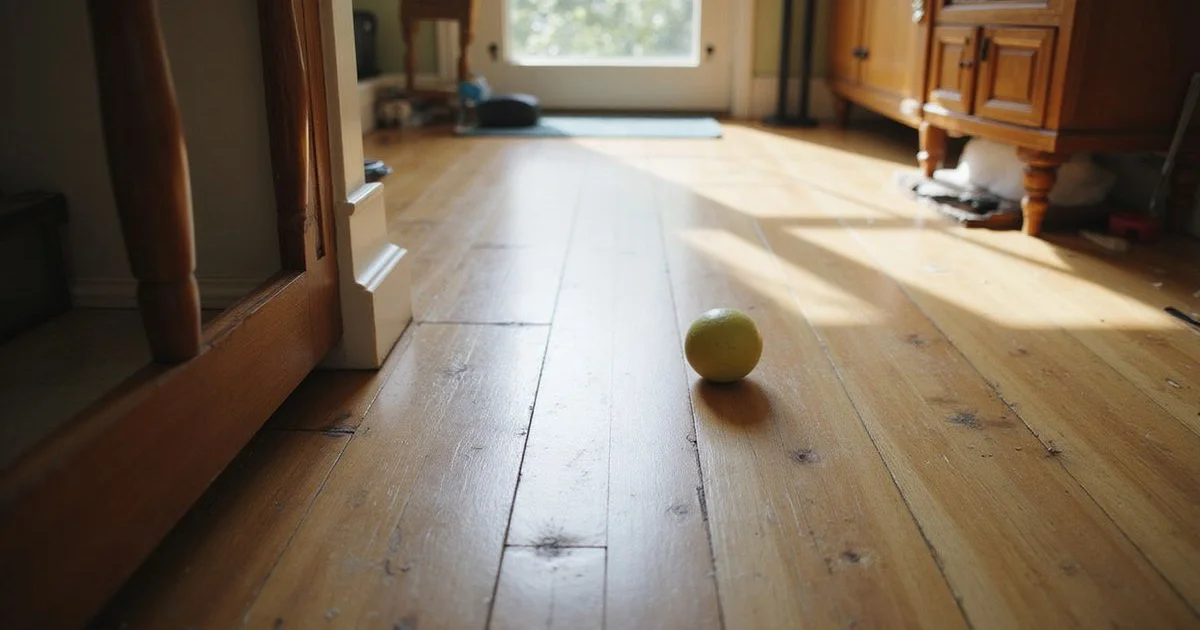
Note which doors bind, in which rooms, and whether the gap along the top runs uneven. Note whether the binding is seasonal or persistent. Note where floors feel wrong and in which direction they seem to fall. Put a marble or a ball down and see which way it goes, in several rooms.
Then write it down with the date.
If you can get into the crawl space safely, look at the posts and the beams beneath the affected area. Are post bases sitting square on their blocks, or have they tilted or sunk? Does the wood look sound, or dark and soft? Our guide to what holds up your floor explains what you are looking at.
When It Warrants an Evaluation
When the pattern is consistent rather than isolated. When binding has worsened progressively across years. When a floor reads clearly out of level rather than feeling slightly odd. When cracks in the walls above accompany the floor symptoms. And when you intend to sell, because a dated baseline answers a question a buyer’s inspector will raise.
The cases that do not warrant it: a single door that sticks each damp spring, a floor that has always been slightly uneven and has not changed, and a house whose previous owners have lived with the same condition for forty years without incident.
Telling the difference is what an evaluation is for, and being told nothing needs doing is a perfectly good result.